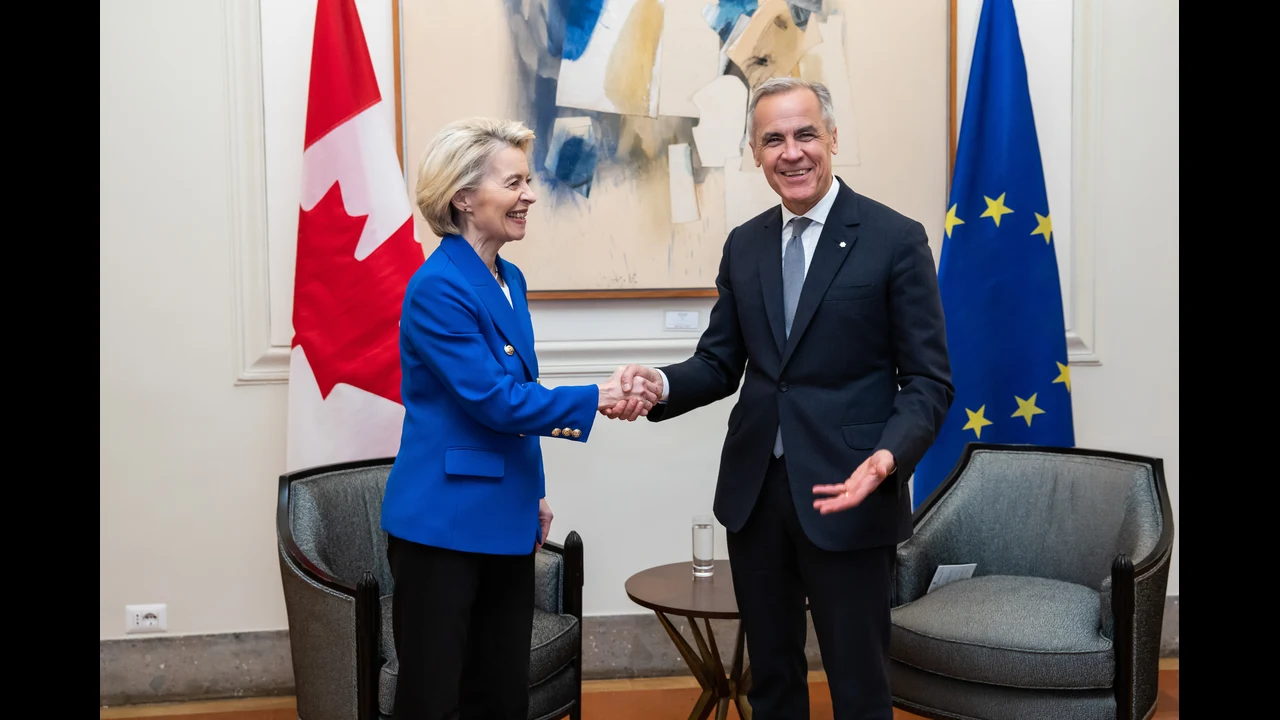
Canada and the European Union launched a new “Alliance for the Future” on Friday, October 30, closing a two-day summit in Montreal with a package of agreements on Ukraine, critical minerals, digital trade and defence cooperation. Canadian Prime Minister Mark Carney hosted European Commission President Ursula von der Leyen and European Council President Antonio Costa for the talks, which both sides described as a step toward the closest partnership Canada has ever had with the bloc.
“Together, Canada and the European Union are anchoring the ground,” Carney told reporters after the summit, describing the alliance as a way to uphold shared values while forming what he called a protective canopy under which citizens on both sides of the Atlantic can thrive. Von der Leyen stressed that the partnership was “not against anyone else, but for our common strength.”
What the two sides agreed
Officials released a seven-page joint statement setting out more than twenty measures. Brussels and Ottawa signed a new digital trade agreement and a separate pact allowing the European Investment Bank to back Canadian critical mineral projects, giving European financing a direct route into Canada’s mining and processing sector.
Canada also joined the European Union’s €90 billion support loan for Ukraine, with Carney announcing an initial Canadian contribution of €500 million, worth roughly $559 million. Ukraine faces a budget shortfall of at least €70 billion next year, even after €45 billion the EU is already set to disburse, and Kyiv’s partners have been lining up contributions in recent weeks. Norway pledged $9 billion for 2027 on October 7, and the United Kingdom announced a $13 billion pledge on October 28, its largest ever. Canada’s participation would also allow Ukraine to purchase military equipment from Canadian defence companies using EU funds, according to a Canadian government backgrounder.
The summit also sketched out a two-tier partnership structure. Canada and the EU would form the nucleus of a larger alliance open to other partners, with work focused on collective sovereignty and resilience in areas such as artificial intelligence, energy, critical minerals and quantum technology, Carney said.
A new label, and a dispute over the name
One phrase from the summit drew particular attention. Von der Leyen said Canada would become the European Union’s first “associate member,” a term Carney also used when addressing journalists. Carney posted afterwards that the two sides had taken a major step forward, establishing more than twenty measures to increase affordability, create opportunities and ensure sovereignty on both sides of the Atlantic.
The label itself remains contested. It has no legal basis, and Germany and a handful of other EU states have opposed it. Von der Leyen doubled down on the term in Montreal, while Carney said its substance would be determined in the coming months. In Brussels’ view, the term defines a unique partnership that entails aligning policies on areas such as climate and artificial intelligence, Canada joining some EU programmes, and creating a stable governance framework. The joint declaration commits the two sides to establishing an even closer association short of full membership by the 2027 Canada-EU Summit.
Why the partnership is moving now
Reactions and what happens next
Reaction to the summit split between enthusiasm for the substance and scepticism about the label. Supporters pointed to the concrete deals — the digital trade agreement, the critical minerals financing and the Ukraine loan contribution — as evidence of a partnership with real weight. Critics inside the EU questioned whether “associate member” promised more than the bloc could deliver, and whether the term would create expectations among other partners that Brussels could not meet.
The calendar for the next phase is already set. The college of European Commissioners will meet members of the Canadian government in Canada in March 2027, and Carney will take part in a European Council summit in June, with the aim of concluding discussions on the new partnership. The two sides also intend to launch a dedicated dialogue on the Arctic, following the European Commission’s recent presentation of its new Arctic strategy, and to deepen foreign and security policy cooperation covering sanctions, the defence industry, maritime security, hybrid threats, cybersecurity and space.
For now, the Montreal summit leaves Canada closer to Europe than it has ever been, without making it a member of the club. Whether the “associate member” label survives the negotiations ahead matters less than the deals already signed — and the signal they send about where Canada is placing its bets in an uncertain world.