Federal prosecutors have sharply escalated a criminal investigation into Alaska’s fiercely contested Senate race, issuing a wave of new grand jury subpoenas and asking a court to isolate ballots just days before voters head to the polls in the November 3 midterm elections. According to the Associated Press, subpoenas seeking grand jury testimony or documents, along with demands to preserve records, were issued on Thursday, October 29, with more expected to follow. A person familiar with the matter told the news agency that neither the recipients nor the total number of subpoenas was immediately clear, and the source spoke on condition of anonymity because they were not authorised to discuss the ongoing inquiry publicly.
What the investigation is about
At the centre of the inquiry is an unusual twist on Alaska’s ballot: two men named Dan Sullivan are running for the same Senate seat. Republican incumbent Dan S. Sullivan, who has held the seat since 2015 and is seeking a third six-year term, faces Democratic former Representative Mary Peltola, along with Daniel J. Sullivan Jr., a retired schoolteacher from the small fishing community of Petersburg, and a fourth candidate, Gerald Heikes.
Federal investigators have for months been examining allegations that Daniel J. Sullivan Jr. entered the race to confuse voters and siphon support away from the incumbent senator. The inquiry intensified after The New York Times reported that people working with Peltola’s campaign and Democratic operatives appeared to have been involved in recruiting the second Sullivan, an effort the newspaper said began in 2025, when aides were asked to compile a list of Alaskans named Dan Sullivan.
Peltola denied on Thursday that she knew anything about the effort to put Daniel J. Sullivan Jr. on the ballot. Her campaign has said it had no involvement in recruiting any candidate into the race, and the Democratic Senatorial Campaign Committee has likewise denied involvement. Daniel J. Sullivan Jr. has long denied that he is running at the Democrats’ behest and has said he had no contact with Peltola’s campaign. President Donald Trump earlier in the week called for the criminal prosecution of Peltola and her campaign. Attorney General Todd Blanche, in a Fox News interview on Wednesday, declined to discuss any criminal investigation but accused Democrats of “cheating”.
Prosecutor confirms probe in Anchorage
On Friday, October 30, Alaska’s top federal prosecutor publicly confirmed that a criminal investigation is under way. United States Attorney Michael Heyman told reporters in Anchorage that the investigation had been running for several months, but that the recent revelations had produced a “significant surge of law enforcement assets to Alaska”. Heyman would not say what potential crimes authorities are examining or who the targets of the investigation might be, but he appealed to members of the public to come forward with any tips that could help investigators. The potential targets of the inquiry remain unclear, according to the Associated Press.
Separately, the Justice Department has pursued a parallel civil case. As part of a lawsuit filed last week, federal lawyers asked a judge to order Alaska election officials to preserve and segregate all ballots ranking Daniel J. Sullivan, so that investigators could examine whether any such ranking was the product of voter confusion. Assistant United States Attorney E. Bryan Wilson wrote in the filing that the government “seeks to preserve and segregate all ballots ranking Daniel J. Sullivan for the purposes of investigating whether such ranking was the product of voter confusion, should such an investigation become necessary.”
Department attorneys argued there is a “substantial risk” that the second Sullivan’s candidacy “will mislead voters and ultimately result in an electoral process that lacks integrity”. They requested a decision by Monday, the day before the election. The department has also sought to compel the Peltola campaign and the Democratic Senatorial Campaign Committee to answer questions about their reported role in recruiting the challenger. State attorneys have pushed back, arguing that Alaska election officials already took steps to distinguish the two men on the ballot. The incumbent appears as “Dan S. Sullivan”, Republican and incumbent, while the challenger appears as “Daniel J. Sullivan Jr.”, with no party affiliation. Earlier this year, a top state elections official ruled Daniel J. Sullivan Jr. ineligible for the primary ballot, but the Alaska Supreme Court later ruled that both candidates may remain on the ballot, restoring him shortly before the ballot-printing deadline. Alaska’s Republican governor, Mike Dunleavy, has separately ordered an investigation into Peltola, saying the newspaper’s reporting “reveals disturbing new evidence of an organised effort to manipulate Alaska’s elections by recruiting candidates, including one with the same name as an incumbent US Senator, to deliberately confuse voters and misdirect their votes”.
Why Alaska’s race matters
Alaska’s Senate contest is one of the most closely watched races of the midterm cycle, because control of the Senate for the final two years of President Trump’s presidency could hinge on a handful of seats. Under Alaska’s ranked-choice voting system, voters rank candidates in order of preference, and the process can take days to resolve if no candidate wins an outright majority in the first round. In August’s primary, Peltola received 49.5 percent of the vote, compared with about 41 percent for Senator Sullivan, setting up a competitive general election. Nationwide, early voting has already surged past previous midterm records, with tens of millions of ballots cast before Election Day, and Alaska’s race has drawn national attention precisely because it is so tight.
The timing of the Justice Department’s moves has itself become part of the story. The department has historically avoided taking overt investigative steps against candidates in the weeks before an election, or other public actions that could be perceived as attempting to influence a political outcome. Critics have questioned whether the subpoenas and the ballot-segregation request break with that tradition, while supporters of the investigation argue that possible voter confusion must be addressed before votes are counted. A similar dispute played out in California, where the 9th US Circuit Court of Appeals rejected the Justice Department’s request to set aside disputed ballots sent to some 20,000 people the administration contends may not be US citizens. The Alaska request is now before a federal judge, with a ruling sought before Tuesday’s vote.
What happens next
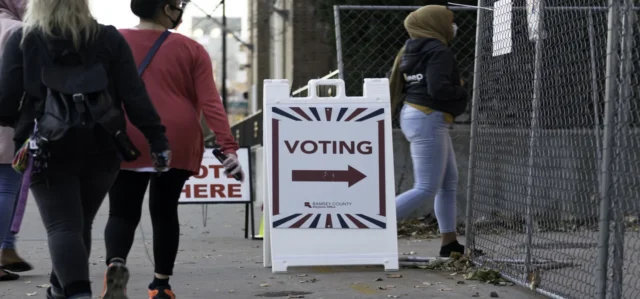
Voters in Alaska will cast their ballots on Tuesday, November 3, under the ranked-choice system, with the two Sullivans listed separately and distinctly on the ballot. The judge’s decision on segregating ballots ranking Daniel J. Sullivan Jr. is expected by Monday, and any ballots set aside would be preserved while investigators assess whether confusion affected the result. Meanwhile, the criminal investigation continues, with further subpoenas possible and no public word on targets or potential charges. The Justice Department had previously directed its lawyers to sue to block certification of the Alaska Senate result should Peltola defeat the incumbent, a step that could prolong any dispute well beyond Election Day if the margin is close.
For now, both campaigns are pressing ahead with their closing arguments to voters, while election officials prepare for a count that, in a race this tight and this unusual, may not be settled quickly. Whatever the outcome, the case of the two Dan Sullivans has already become one of the defining controversies of the 2026 midterms, raising questions about ballot design, campaign tactics and the role of federal prosecutors in the final days of an election. Read more world news on sialnews.com.