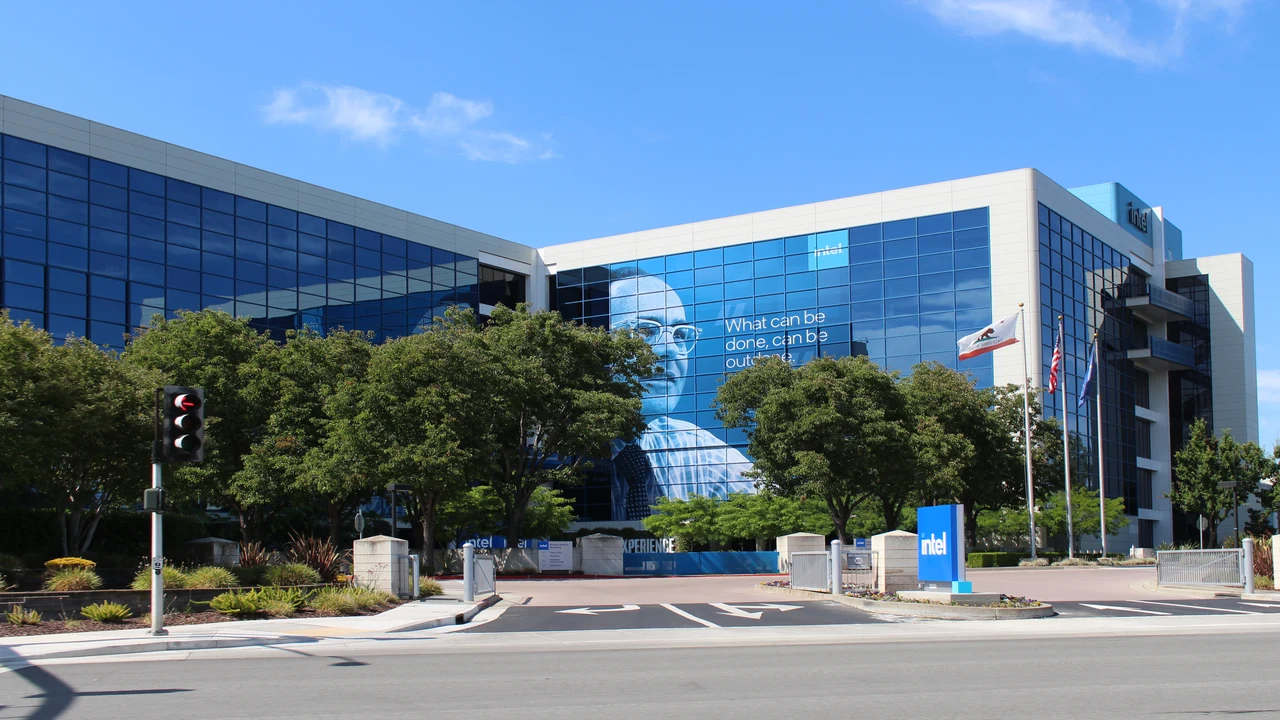
Intel shares collapsed by 28.6 percent on Friday, October 30, closing at $65.76 after a fourth-quarter forecast that fell far short of Wall Street expectations, marking the chipmaker’s worst single trading day since 1974. Shares had closed at $92.07 on Thursday and fell by as much as 30 percent during Friday’s session, wiping out more than $146 billion in market value in a single day and dragging the wider technology market down with them.
A strong quarter overshadowed by a weak outlook
Punishment came for the forecast, not for the quarter just reported. Intel’s third-quarter revenue rose 21 percent from a year earlier to $16.5 billion, while adjusted earnings reached $0.52 per share, beating the $0.40 analysts had expected. Revenue from the data centre and artificial intelligence business jumped 78 percent to $7.3 billion, its fastest pace in 15 years, as demand for AI server processors surged.
Guidance for the final three months of the year told a different story. Intel expects fourth-quarter revenue of $15 billion to $16 billion, against roughly $17.1 billion analysts had modelled, and adjusted earnings of $0.25 per share, against forecasts of $0.43. Non-GAAP gross margin is forecast at 38 percent, down from 44.1 percent in the third quarter. Chief financial officer David Zinsner told investors the company does not expect positive cash flow this year, and warned that the personal computer slowdown would continue at least into the first half of next year.
Why the PC business broke the quarter
Three problems explain much of the deterioration. Weakening demand for personal computers sits at the centre. Intel’s PC chip division, which accounts for roughly half of its revenue, brought in $8.1 billion in the third quarter, down 5 percent, and the company expects its revenue to fall by more than 20 percent from the third quarter to the fourth. Intel now expects PC shipments to fall about 12 percent this year and another 10 percent in 2027.
Memory prices have made the squeeze worse. AI data centres are buying up the world’s memory chips, pushing up the cost of laptops and desktops, and PC makers have responded by cutting orders and running down inventory. At the same time, Intel cannot make enough chips for AI servers, the fastest-growing part of the market, because of manufacturing and packaging shortages. One company therefore finds itself with too many chips for a shrinking PC market and too few for the boom in AI servers.
An explosion at Intel’s Fab 28 plant in Kiryat Gat, Israel, on October 14 added to the damage. Two workers were killed in the accident, which caused an extended shutdown, and Zinsner said it would cost about $600 million in revenue over two quarters.
A historic fall, but not the worst on record
Market data puts Friday’s fall in rare company. Only a drop of nearly 30 percent on July 5, 1974, sits clearly ahead of it, and calculations published before Friday’s open showed that a close below about $68 would make the day Intel’s worst since 1974, while a close below about $64.50 would have made it the worst on record. Friday’s $65.76 close cleared the first mark but not the second, so the session ranks as the worst since 1974 without setting an all-time record.
Friday’s drop also capped a wild year for the stock. Shares had nearly quadrupled from their January level to a record on June 22, and even after Friday’s fall they remained up more than 80 percent in 2026. Before the earnings report, the stock had climbed about 150 percent since the start of the year, making it one of Wall Street’s standout performers. That run is part of why the reaction was so sharp: a stock priced for a smooth turnaround had little room for a warning.
Concern spread beyond the share price. The cost of insuring Intel’s debt against default over five years jumped to its highest level since October 2022, and the company ended September with $21.84 billion in cash against $46.32 billion in long-term debt. The United States government, which took a stake of about 10 percent in Intel in August 2025, saw roughly $10 billion knocked off the value of its holding on Friday, although at Friday’s prices the stake remained worth about three times what the government paid.
Analysts turn, and the rout spreads
Analyst reaction was blunt. Bernstein analyst Stacy Rasgon described the outlook in one word as terrible, Bank of America downgraded the stock to neutral, saying Intel had not shown enough traction with outside foundry customers, and Jefferies called the December-quarter outlook a substantial reset, cutting its price target to $85 from $120. Hargreaves Lansdown analyst Matt Britzman said the market was in a sell-first mood and that Intel’s warning had given investors an easy excuse to take money off the table across chip stocks.
Selling spread quickly across the sector. The Philadelphia Semiconductor Index finished 7.2 percent lower, with Advanced Micro Devices down 10.88 percent, Nvidia down 4.22 percent, Qualcomm down 11.12 percent and Broadcom and Micron each down more than 5 percent. Amazon fell 1.41 percent after its own quarterly report, which showed a large cash outflow and higher planned spending. Asian chip names followed lower, with SK Hynix sliding more than 7 percent and Samsung Electronics more than 3 percent, and Bitcoin fell more than 4 percent as risk appetite faded.
Wall Street’s main indexes all closed lower. The Nasdaq Composite fell 2.86 percent to 25,437, its worst day since June and its biggest monthly decline since March 2025, while the S&P 500 lost 1.82 percent to 7,580.07, also its worst session since June, and the Dow Jones Industrial Average dropped 1.09 percent to 51,770.31. Six of the market’s eleven sectors still managed gains, led by energy and consumer staples, but technology fell 4.24 percent, the deepest loss of any sector.
Background: a turnaround still in progress
Intel’s troubles arrive in the middle of a multiyear rebuilding effort under chief executive Lip-Bu Tan, who told investors on Thursday’s call that rebuilding Intel would be a multiyear journey. Founded in 1968, Intel dominated personal computing for decades, but it lost ground in recent years as rivals moved faster into mobile and AI chips, and its manufacturing arm fell behind competitors in producing the most advanced processors.
Investors had begun to believe the turnaround story again in 2026, helped by the AI server boom and by the government’s investment. Friday’s forecast challenged that belief on two fronts at once: it showed the old PC business weakening faster than expected, and it showed the new AI business unable to grow fast enough, for now, to make up the difference. Whether outside customers trust Intel’s factories with their most advanced designs remains the open question behind the analyst downgrades.
What happens next
Attention now turns to the December quarter itself and to the first results of 2027. Investors will watch whether PC orders stabilise, whether the Kiryat Gat plant returns to full production on schedule, and whether Intel can convert booming AI server demand into shipped product rather than constrained supply. Foundry progress, including any new outside customer wins, will matter as much as the headline revenue figure, since the downgrades centred on doubts about that business.
For the wider market, Friday’s rout is a test of how much faith remains in the AI spending boom. Meta and Alphabet results had already raised questions about the returns on huge AI infrastructure budgets, and Amazon’s spending plans added to the unease. Intel’s warning turned that unease into a sell-off. If the next round of technology earnings restores confidence, Friday may look like a harsh reset for one stock. If forecasts keep disappointing, it may instead be remembered as the day the market stopped giving the AI boom the benefit of the doubt.