


Apple’s iPhone 18 Pro has officially arrived, bringing one of the most important camera upgrades ever fitted to an iPhone alongside a new A20 Pro processor, significantly improved battery life, enhanced cooling and a redesigned Dynamic Island.
Announced on September 9, 2026, the new flagship lineup consists of the iPhone 18 Pro and iPhone 18 Pro Max. Pre-orders begin on September 12, followed by availability in the first wave of markets on September 18, 2026.
Prices start at $1,199 for the iPhone 18 Pro and $1,299 for the iPhone 18 Pro Max in the United States. Both models now start with 256GB of storage and can be configured with as much as 2TB.
Photography receives the biggest upgrade. Apple has introduced a 48MP Fusion Main camera with a physical variable aperture, allowing the lens to switch between f/1.48, f/1.8, f/2.8 and f/4.0. The company has also added manual photography controls directly to its Camera app.
Under the hood, the new A20 Pro chip combines a six-core CPU, seven-core GPU and Dual 16-core Neural Engine, while a larger vapor chamber is designed to sustain performance for longer periods.
Here is everything buyers need to know about Apple’s new flagship phones.

iPhone 18 Pro Key Specifications
| SpecificationiPhone 18 Pro | |
|---|---|
| Display | 6.3-inch Super Retina XDR OLED |
| Pro Max display | 6.9-inch Super Retina XDR OLED |
| Refresh rate | ProMotion up to 120Hz |
| Chip | Apple A20 Pro |
| CPU | 6-core |
| GPU | 7-core with Neural Accelerators |
| Neural Engine | Dual 16-core |
| Main camera | 48MP Fusion Main |
| Main aperture | f/1.48, f/1.8, f/2.8, f/4.0 |
| Ultra Wide | 48MP |
| Telephoto | 48MP, native 4x |
| Optical-quality telephoto | Up to 8x |
| Front camera | 18MP Center Stage |
| Storage | 256GB, 512GB, 1TB, 2TB |
| Operating system | iOS 27 |
| Wi-Fi | Wi-Fi 7 |
| Bluetooth | Bluetooth 6 |
| Port | USB-C, USB 3 up to 10Gb/s |
| Water resistance | IP68 |
| Colors | Black, Silver, Glacier, Burgundy |
| iPhone 18 Pro price | From $1,199 |
| iPhone 18 Pro Max price | From $1,299 |
| Release date | September 18, 2026 |
Apple’s official specifications confirm the two display sizes, four storage capacities, A20 Pro chip and triple 48MP rear-camera system.
iPhone 18 Pro Release Date
Apple unveiled the iPhone 18 Pro and iPhone 18 Pro Max on September 9, 2026.
The official launch schedule is:
Announcement: September 9, 2026
Pre-orders: September 12, 2026
First availability: September 18, 2026
Additional countries: September 25, 2026
More than 65 countries and regions are included in Apple’s first launch wave, including the United States, United Kingdom, Australia, Canada, China, India, Japan, Malaysia, Singapore and the UAE. Another 20 markets follow on September 25.
Pakistan is not named by Apple among the initial launch countries, meaning local availability may depend on importers and subsequent distribution.
iPhone 18 Pro Price
Apple has increased the starting price of its Pro phones for 2026.
The iPhone 18 Pro starts at $1,199, while the iPhone 18 Pro Max starts at $1,299 in the United States.
Importantly, both models now begin with 256GB of storage.
Available capacities are:
- 256GB
- 512GB
- 1TB
- 2TB
Apple’s online store lists the 256GB iPhone 18 Pro from $1,199 and the 256GB Pro Max from $1,299. Higher storage options cost more, with the 2TB Pro Max reaching $2,499 in the U.S. store.
What Will the iPhone 18 Pro Cost in Pakistan?
An official Pakistan retail price has not been announced by Apple.
Pakistani buyers should therefore be cautious about pages presenting an estimated rupee figure as an official price.
The eventual cost of an imported iPhone 18 Pro in Pakistan can depend on:
- U.S. or international purchase price
- Currency exchange rate
- Import costs
- Retailer margin
- Storage capacity
- Device region
- PTA approval status
- Applicable taxes and duties
Early imported units also commonly carry a premium immediately following an international iPhone launch.
A more useful comparison for Pakistani buyers will be the market price of an unregistered handset versus the total cost of a PTA-approved device once verified units begin reaching local retailers.
iPhone 18 Pro Design and Build Quality
A Familiar Design With Four New-Look Finishes
Apple has not completely reinvented the shape of the Pro iPhone.
Instead, the iPhone 18 Pro retains the company’s established flagship design while introducing refinements to materials, internal layout and colors.
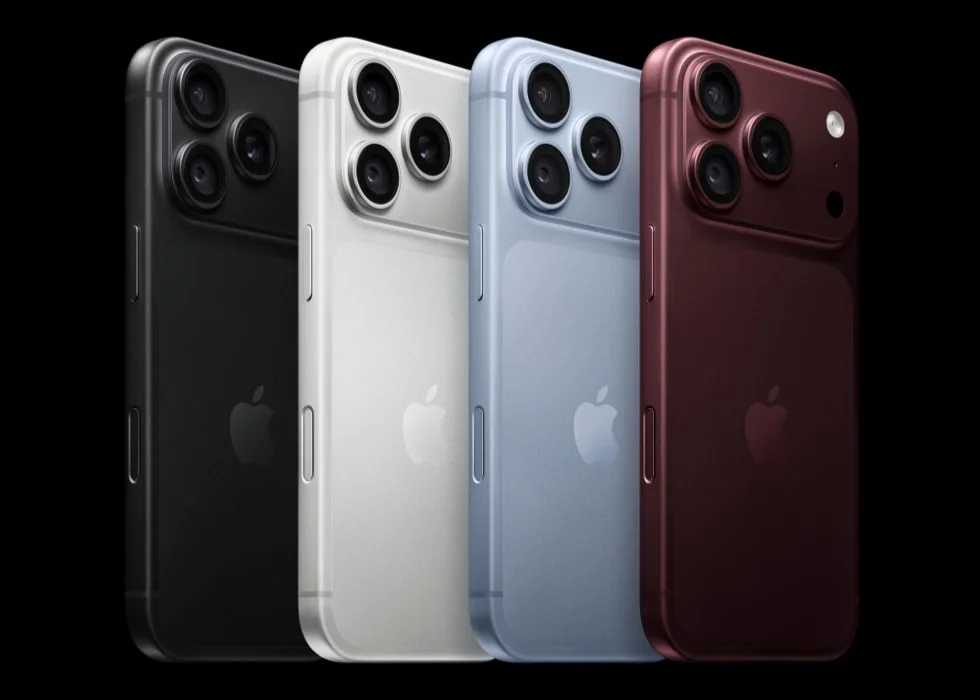
Four finishes are available:
Black
Silver
Glacier
Burgundy
Burgundy is the standout new color, while the return of a conventional black option may appeal to buyers who prefer a more understated Pro finish.
Independent hands-on coverage also notes that the external changes are relatively restrained compared with the improvements made inside the phone.
Aluminum Unibody and Ceramic Shield
Both models use an aluminum unibody construction, with Ceramic Shield 2 protecting the front and Ceramic Shield covering the back.
Apple lists an IP68 rating for splash, water and dust resistance under IEC standard 60529, tested at a maximum depth of six meters for up to 30 minutes.
Water resistance should not be interpreted as permanent waterproofing; resistance can decline as a phone ages or suffers physical damage.
iPhone 18 Pro and Pro Max Size
The iPhone 18 Pro measures:
- 150.0 mm tall
- 71.9 mm wide
- 8.75 mm thick
- 211 grams
The iPhone 18 Pro Max measures:
- 163.4 mm tall
- 78.0 mm wide
- 8.75 mm thick
- 249 grams
The larger phone is therefore considerably heavier, but its extra size helps accommodate the larger display and battery.
iPhone 18 Pro Display
6.3-inch and 6.9-inch ProMotion Displays
Screen sizes remain familiar.
The iPhone 18 Pro uses a 6.3-inch Super Retina XDR OLED display with a 2622 × 1206 resolution.
The iPhone 18 Pro Max uses a 6.9-inch Super Retina XDR OLED display with a 2868 × 1320 resolution.
Both provide:
- ProMotion adaptive refresh rate up to 120Hz
- Always-On display
- HDR
- True Tone
- P3 wide color
- 2,000,000:1 contrast ratio
- 1,600 nits peak HDR brightness
- Up to 3,000 nits peak outdoor brightness
- Anti-reflective coating
- 1-nit minimum brightness
Those specifications make the Pro Max primarily a choice for people who want more screen area rather than better display technology—the core display capabilities are shared between the two devices.
Dynamic Island Is Smaller and More Useful
Apple has redesigned Dynamic Island rather than removing it.
The updated implementation creates additional usable screen space and can now display three Live Activities at the same time.
That means a user could, for example, keep navigation, music playback and a live sports activity visible without continuously switching between applications.
Face ID remains integrated through the TrueDepth camera system.
iPhone 18 Pro Camera System
Variable Aperture Is the Biggest iPhone 18 Pro Camera Upgrade
Camera hardware is the headline story of the iPhone 18 Pro generation.
The rear system contains:
- 48MP Fusion Main camera
- 48MP Fusion Ultra Wide camera
- 48MP Fusion Telephoto camera
The main camera now introduces something Apple has never previously offered on an iPhone: physical aperture control.
How the iPhone 18 Pro Variable Aperture Works
The 48MP Fusion Main camera can operate at four apertures:
f/1.48
f/1.8
f/2.8
f/4.0
Six blades inside the camera assembly physically change the opening of the lens.
Why does that matter?
A wider aperture such as f/1.48 lets more light reach the sensor. That is useful in darker environments and can help produce stronger natural background separation.
Closing the aperture to f/4.0 increases depth of field, which can help keep more subjects at different distances in focus.
For example, the camera can open its aperture in a dark restaurant but stop down when photographing a group in bright daylight.
Apple allows the phone to choose automatically, while photographers can select an aperture themselves using manual controls.
Independent hands-on analysis has noted that the wider f/1.48 maximum aperture may prove at least as important in daily photography as the ability to stop the lens down, particularly because smartphone sensors naturally have greater depth of field than larger cameras.
Manual Camera Controls Finally Arrive
Photographers no longer need a third-party application for several basic manual adjustments.
Apple’s native Camera app now provides Pro controls for:
- Lens aperture
- Shutter speed
- White balance
- Histogram
- Camera selection
The change is particularly important for photographers who previously found Apple’s standard Camera interface too automated.
A photographer shooting movement, for example, can deliberately select a slower shutter speed to introduce motion blur instead of relying entirely on automatic processing.
48MP Main Camera
The primary camera uses a 24mm equivalent lens and Apple’s second-generation sensor-shift optical image stabilization.
Images can be captured at 24MP or the full 48MP resolution.
A 12MP 2x optical-quality mode uses the central portion of the sensor to provide a 48mm equivalent field of view.
The combination effectively gives users a normal wide camera and a useful 2x perspective without requiring another physical lens.
48MP Ultra Wide Camera
Apple’s 48MP Ultra Wide offers:
- 13mm equivalent focal length
- f/2.2 aperture
- 120-degree field of view
- Macro photography
- 24MP and 48MP high-resolution capture
Ultra-wide cameras have historically delivered lower image quality than primary smartphone cameras, so retaining a 48MP sensor here helps make the three-camera setup more consistent.
48MP Telephoto Camera and 8x Zoom
The Telephoto camera uses a tetraprism design with a native 100mm equivalent 4x perspective and f/2.8 aperture.
Apple also provides an 8x optical-quality option equivalent to approximately 200mm.
The wording matters: Apple describes 8x as optical-quality, rather than saying the phone contains a native 8x optical lens.
Digital zoom extends to 40x.
For everyday use, the 4x and 8x positions should be most relevant for portraits, travel photography, concerts, architecture and subjects that cannot easily be approached.
New Computational Imaging
Hardware changes are accompanied by a revised image-processing pipeline.
Apple says its new computational photography system produces more detail from the Main camera and improves low-light photography.
Because those statements come from Apple, independent camera comparisons will be important once full retail reviews become available.
That distinction matters: specifications can confirm what hardware is inside a phone, but only controlled comparisons can establish whether it consistently produces better photographs than competing devices.
Photographic Styles 3
Photographic Styles now go beyond color and tone.
New controls can adjust:
- Texture
- Grain
- Color appearance
- Skin rendering
The adjustments can be changed later, giving users more flexibility than simply applying a permanent filter while capturing an image.
Apple Reference Image Could Matter Beyond Smartphone Photography
A less obvious iPhone 18 Pro feature may become increasingly important in the age of generative AI.
Apple Reference Image can create a signed representation of what the camera sensor originally captured.
Apple describes it as an unalterable reference image that can be compared with an edited version in Photos.
The company says its system uses signed sensor data and Private Cloud Compute, while image metadata and future SynthID support can provide additional information about AI-generated or modified content.
For ordinary users, the feature may initially feel specialized.
For photojournalists, publishers, investigators and professional photographers, however, a verifiable original could become increasingly valuable as AI-generated imagery becomes harder to distinguish visually.
iPhone 18 Pro Video Features
Apple continues targeting professional filmmakers and content creators.
Video features include:
- 4K Dolby Vision recording
- ProRes
- ProRes RAW
- Apple Log 2
- ACES support
- Cinematic mode
- Spatial video
- External recording
- Audio Mix
- Studio-quality microphones
- Wind noise reduction
The main camera system can record 4K Dolby Vision at high frame rates in supported modes, while external workflows enable demanding professional formats.
Cinematic Effects After Recording
Users can apply supported Cinematic effects after footage has already been captured instead of deciding on every effect before recording.
This is particularly useful for creators who need flexibility during editing.
Apple has also added 4K Dolby Vision support to Time-lapse recording.
Dual Capture
Dual Capture records using front and rear cameras simultaneously.
The function is useful for:
- Vlogging
- Event coverage
- Interviews
- Reaction videos
- Travel footage
- Social media
- Journalism
A presenter can remain visible while simultaneously showing what is happening in front of the phone.
18MP Center Stage Front Camera
Apple uses an 18MP Center Stage front camera with an f/1.9 aperture and autofocus.
Center Stage can intelligently change framing to accommodate additional people.
The front camera supports features including:
- Center Stage photos
- Center Stage video calls
- Dual Capture
- Ultra-stabilized video
- Night mode
- 4K Dolby Vision
- ProRes
- ProRes RAW
- Apple Log 2
- Pro controls
The unusually extensive video feature set makes the front camera much more relevant for creators than a conventional selfie-camera upgrade.
A20 Pro Chip: Performance, AI and Cooling
The iPhone 18 Pro is powered by the new A20 Pro.
Apple lists:
- 6-core CPU
- 7-core GPU
- Neural Accelerators
- Dual 16-core Neural Engine
- Hardware-accelerated ray tracing
Apple says A20 Pro is manufactured using a 2-nanometer process and provides 50% more memory bandwidth than A19 Pro.
The company also claims its seven-core GPU is up to 40% faster than the A19 Pro GPU in specified workloads.
Those percentages are Apple’s performance claims and should not be treated as independent benchmark findings.
Dual 16-Core Neural Engine
AI processing receives particularly heavy attention.
A20 Pro contains two 16-core Neural Engine arrays for 32 total neural-processing cores.
Apple says this provides twice the AI processing power of A19 Pro for supported workloads.
That additional capacity supports computational photography and increasingly complex Apple Intelligence features running directly on the device.
A Much Larger Vapor Chamber
Performance means little if the processor has to slow down after several minutes because of heat.
Apple has therefore redesigned the iPhone 18 Pro cooling system.
The next-generation vapor chamber has approximately three times the surface area of the previous generation, according to Apple.
The company claims the new cooling design and A20 Pro enable up to a 40% improvement in sustained performance compared with the previous generation.
Potential beneficiaries include:
- Gaming
- ProRes processing
- AI workloads
- Video exports
- Photo editing
- Long recording sessions
Independent testing will determine how large the improvement is under real-world workloads.
iPhone 18 Pro Battery and Charging
iPhone 18 Pro Battery Life
Battery endurance has received a substantial improvement, particularly on the Pro Max.
Apple rates the iPhone 18 Pro for:
Typical use: up to 24 hours
Video playback: up to 36 hours
Streamed video: up to 33 hours
Apple rates the iPhone 18 Pro Max for:
Typical use: up to 30 hours
Video playback: up to 45 hours
Streamed video: up to 40 hours
Apple calls the Pro Max improvement its largest battery-life increase yet for an iPhone.
Real-world endurance will vary according to signal strength, brightness, camera use, gaming, applications and network conditions.
Faster Charging: Up to 50% in Around 15 Minutes
Wired charging becomes noticeably quicker.
Apple says the iPhone 18 Pro can reach up to 50% in around 15 minutes using a compatible 60W-capable or higher power adapter with Adjustable Voltage Supply.
The adapter is sold separately.
MagSafe and Qi2 wireless charging both support up to 25W, with Apple quoting approximately 50% charge in 30 minutes under the required conditions.
Those improvements do not mean the iPhone constantly charges at 60W; Apple’s specification describes the required adapter capacity and charging result rather than a fixed phone charging wattage.
iOS 27, Apple Intelligence and Siri AI
The iPhone 18 Pro ships with iOS 27.
Apple Intelligence remains deeply integrated into the operating system, while Siri AI represents Apple’s next generation of its digital assistant.
Apple describes Siri AI as more conversational and more capable of understanding personal context across applications.
AI capabilities also feed into:
- Visual Intelligence
- Writing tools
- Photo editing
- Image understanding
- Siri
- Shortcuts
- Search and system assistance
Feature availability can vary by language and region, so buyers should not assume every advertised Apple Intelligence function is available everywhere at launch.
iPhone 18 Pro Connectivity
Wi-Fi 7, Bluetooth 6 and Apple’s C2 Modem
Wireless connectivity includes:
- 5G
- Wi-Fi 7 with 2×2 MIMO
- Bluetooth 6
- Thread
- NFC
- Second-generation Ultra Wideband
- Apple’s N1 wireless chip
The iPhone 18 Pro also introduces Apple’s C2 cellular modem system.
Apple says C2 provides improved cellular efficiency and faster uploads compared with C1X, while consuming less energy in its testing.
Interestingly, Apple’s technical specifications list the C2 modem specifically under the iPhone 18 Pro section, while the Pro Max wireless listing differs. Buyers interested in exact modem hardware should therefore check the specification of their regional model.
USB-C and USB 3
USB-C supports:
- Charging
- DisplayPort
- USB 3
- Data speeds up to 10Gb/s
The faster data connection matters most for creators transferring large ProRes, ProRAW and other media files to external storage or a computer.
Emergency Satellite Features
Apple’s emergency and off-grid features include:
- Emergency SOS via satellite
- Messages via satellite
- Roadside Assistance via satellite
- Find My via satellite
- Crash Detection
Availability varies by country and service area. Buyers in Pakistan and other markets should verify local support rather than assuming all satellite functions will operate there.
iPhone 18 Pro vs iPhone 18 Pro Max
| FeatureiPhone 18 ProiPhone 18 Pro Max | ||
|---|---|---|
| Display | 6.3-inch | 6.9-inch |
| Resolution | 2622 × 1206 | 2868 × 1320 |
| Chip | A20 Pro | A20 Pro |
| Main camera | 48MP variable aperture | 48MP variable aperture |
| Ultra Wide | 48MP | 48MP |
| Telephoto | 48MP | 48MP |
| Front camera | 18MP | 18MP |
| Storage | 256GB–2TB | 256GB–2TB |
| Video playback | Up to 36 hours | Up to 45 hours |
| Typical use | Up to 24 hours | Up to 30 hours |
| Weight | 211g | 249g |
| Starting price | $1,199 | $1,299 |
The two phones share most major performance and camera features.
Choosing between them therefore depends primarily on display size, battery endurance, physical size, weight and price.
Which iPhone 18 Pro Storage Option Makes Sense?
256GB
The base capacity is suitable for many users who use cloud storage and do not regularly capture large amounts of ProRes video.
512GB
A stronger middle ground for photographers, gamers and people who keep large media libraries locally.
1TB
Better suited to serious video creators and users who rarely want to manage storage.
2TB
Primarily relevant for professional workflows involving large volumes of high-resolution photographs, ProRes or ProRes RAW footage.
The existence of a 2TB option is impressive, but most buyers are unlikely to need that amount of local storage.
Who Should Consider the iPhone 18 Pro?
Photographers
Variable aperture, three 48MP cameras, ProRAW and manual controls substantially expand the creative options available from Apple’s default Camera app.
Video Creators
ProRes RAW, Apple Log 2, Dolby Vision, external recording and improved thermal performance make the phone increasingly capable as a professional production tool.
Mobile Gamers
A20 Pro and the larger cooling system should make the greatest difference during demanding games played for extended periods.
Heavy Smartphone Users
Battery improvements—especially on the Pro Max—could be more valuable than any benchmark increase.
Users With Older iPhones
Owners coming from several generations back will experience a much larger combined improvement in camera hardware, display technology, battery life, processing power and connectivity than people upgrading from a recent Pro model.
Should iPhone 17 Pro Owners Upgrade?
The answer depends heavily on how the phone is used.
For photographers, the variable-aperture main camera and native Pro controls represent meaningful new capabilities.
People who frequently record professional video may also benefit from the improved thermal system, camera workflow and battery endurance.
For an iPhone 17 Pro owner who mainly uses messaging, web browsing, social applications and casual photography, the improvements may feel more evolutionary.
Independent battery tests, sustained-performance benchmarks and camera comparisons will provide a clearer picture once reviewers have spent more time with retail hardware.
What Makes the iPhone 18 Pro Different?
Apple’s 2026 Pro flagship is not simply about a faster processor.
Four changes define the generation:
Variable aperture: physical control over the Main camera’s aperture introduces a genuine new photography capability.
A20 Pro and improved cooling: Apple is focusing not only on peak speed but on keeping performance high during longer workloads.
Battery life: the Pro Max reaches Apple’s highest video-playback rating yet for an iPhone.
AI hardware and software: A20 Pro’s expanded neural hardware is closely tied to Apple Intelligence and Siri AI.
Those changes collectively reveal where Apple sees premium smartphones heading: increasingly advanced cameras, heavier local AI processing and more laptop-like sustained computing performance.
Frequently Asked Questions
Final Perspective
The iPhone 18 Pro represents a more substantial technical upgrade than its familiar exterior initially suggests.
Variable aperture changes how the main camera can physically capture a scene. Manual camera controls reduce Apple’s long-standing dependence on fully automatic photography. A20 Pro and the redesigned vapor chamber target sustained workloads rather than headline benchmark numbers alone. Longer battery life tackles one of the most practical concerns smartphone owners have every day.
The iPhone 18 Pro Max makes the strongest case for buyers who prioritize battery endurance and screen size, while the standard Pro offers essentially the same core flagship experience in a smaller and lighter body.
Whether those improvements justify Apple’s higher prices will ultimately depend on individual needs—and independent testing still matters for camera quality, battery endurance, thermal performance and real-world AI usefulness.
For now, what can be established from Apple’s final specifications is clear: the iPhone 18 Pro generation puts camera control, performance, battery life and artificial intelligence at the center of Apple’s flagship strategy for 2026.


