American forces carried out a fresh round of limited strikes against an Iranian air defence installation on Friday, 6 November, President Donald Trump confirmed, as Qatari mediators pressed both sides toward a possible path back to nuclear talks.
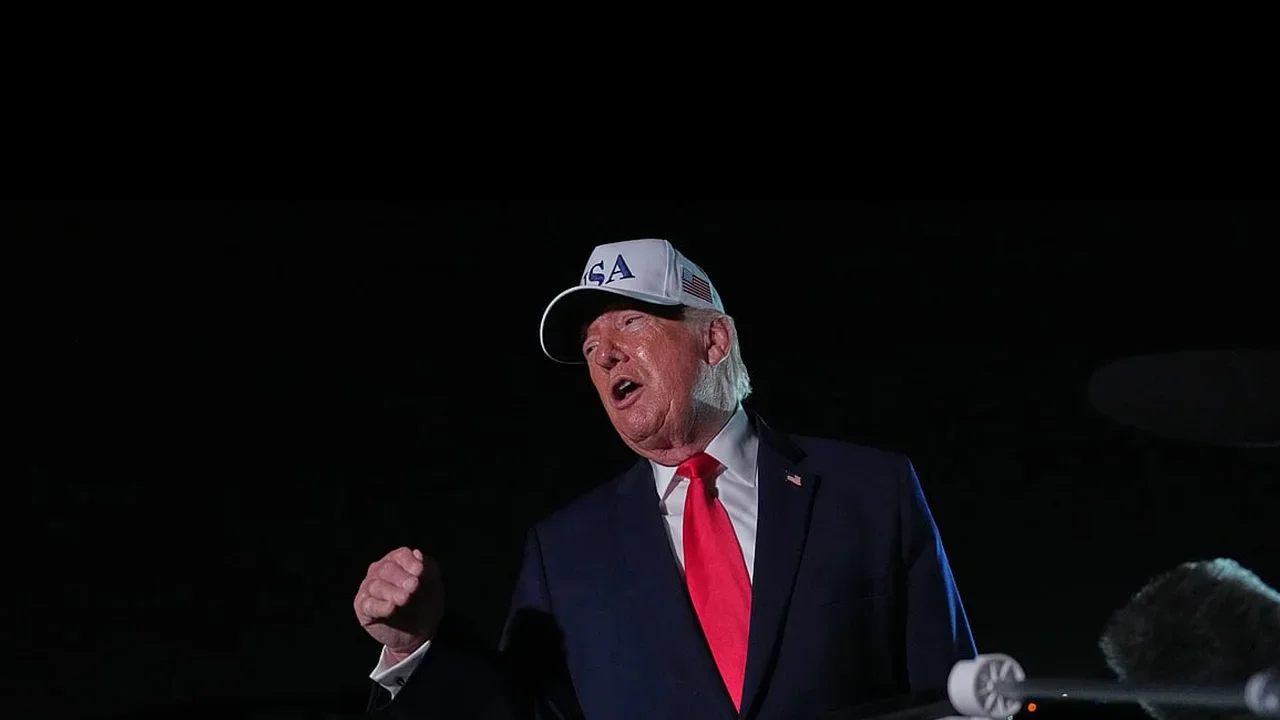
Trump confirmed the action shortly after landing in West Palm Beach, Florida, on Friday evening. He described the operation as small in scale and said US forces had destroyed a newly installed anti-aircraft system within minutes.
“They knocked out — they built a little bit of an anti-aircraft device and we knocked it out in about 15 minutes, maybe five,” Trump told reporters.
Trump gave no further detail about the exact target. Iranian state media reported the sound of two explosions in the Suza area of Qeshm Island, an island sitting in the Strait of Hormuz, a waterway through which a large share of the world’s seaborne oil moves.
Qeshm Island strike details
US officials have said most of Iran’s air defence network was destroyed or badly degraded during Israel’s bombardment in June 2025 and in the opening phase of the current conflict. The US military had already reported defensive strikes on Monday, 2 November, when explosions were heard on Qeshm and Hengam islands and around Bandar Abbas on the nearby mainland. Friday’s action was the first since voters delivered a sharp rebuke to Trump’s Republican Party in Tuesday’s midterm elections.
Qatar bridge deal proposal
Earlier on Friday, two Middle East government officials said Iran was reviewing proposals put forward by Qatar, the chief mediator, aimed at narrowing differences with Washington over Tehran’s nuclear programme. One official stressed that, for now, Iran remains unwilling to open negotiations on its atomic activities until Washington accepts several core conditions Tehran wants written into any ceasefire agreement.
Mediators and Iranian officials have discussed a possible two-day bridge deal built around trust-building steps. Under the proposal, Washington would lift its blockade on Iranian ports and release some of the billions of dollars in Iranian assets frozen over the years, while Iran would let inspectors from the International Atomic Energy Agency visit nuclear sites hit by US and Israeli bombing. On the second day, Iran would reopen the Strait of Hormuz under a modified arrangement it has already reached with Oman, one Washington has not approved.
Iran demands before nuclear talks
Tehran’s list of conditions includes an end to the US blockade on its ports, lifting sanctions, unfreezing assets, compensation for war damage, and an end to hostilities across the region, including Israeli operations in Lebanon. The White House declined to comment on the Qatar-presented proposals, though Trump said earlier on Friday that mediators’ discussions with Iran continue. Defence Secretary Pete Hegseth spoke on Friday with his Qatari counterpart.
Late on Friday, US Central Command said on X that Washington was offering a reward of up to $20 million, plus possible relocation, for information about Iran’s nuclear programme, including facilities, equipment, associated personnel and their movements. Reuters separately reported that Iranian state media said on Saturday that Iranian forces had shot down a US MQ-9 drone over Qeshm Island, a claim Washington had not confirmed.
| Fact | Detail |
|---|---|
| Date of strikes | Friday, 6 November 2026 |
| Location | Suza area, Qeshm Island, Strait of Hormuz |
| Target | Iranian air defence system |
| Explosions reported | Two, per Iranian state media |
| Previous strikes | Monday, 2 November 2026 — Qeshm, Hengam, Bandar Abbas |
| Mediator | Qatar — two-day bridge deal under review |
| US reward offer | Up to $20 million for nuclear programme information |
In the Suza area of Qeshm Island, in the Strait of Hormuz, after US forces targeted an Iranian air defence system on Friday, 6 November 2026.
He called the operation minor and said US forces destroyed a newly installed anti-aircraft system in about 15 minutes, maybe five.
A two-day proposal under which Washington would lift its port blockade and release some frozen Iranian assets, while Iran would admit IAEA inspectors to bombed nuclear sites and reopen the Strait of Hormuz on day two.
An end to the US port blockade, lifted sanctions, unfrozen assets, compensation for war damage, and an end to hostilities across the region, including Israeli operations in Lebanon.