Measles cases in the United States have passed 5,000 in a single year for the first time in 35 years. The Centers for Disease Control and Prevention (CDC) has counted 5,182 confirmed cases so far in 2026, the highest annual total since 1991. Nearly all of the people infected were unvaccinated, and health officials now warn that the country could lose the measles-free status it has held since 2000.
Measles is a highly contagious virus that spreads through the air. It starts with fever and cough, then brings a red rash across the body. Most people recover, but the illness can turn serious. It can cause pneumonia and swelling of the brain, and it can kill. A safe vaccine has prevented measles for more than 60 years, and the United States declared the virus eliminated in 2000. That meant the virus no longer spread on its own inside the country all year round. The 2026 surge shows how fast that protection fades when vaccination rates fall.
Why Measles Cases Surged in 2026
Almost every case this year hit someone with no protection. The CDC says 96 percent of the 5,182 patients were unvaccinated or had an unknown vaccination status. Vaccination among kindergarten children has also slipped. Coverage with the measles, mumps and rubella (MMR) vaccine fell from 95.2 percent in the 2019-20 school year to 92.4 percent in 2025-26. Health experts say coverage must stay at 95 percent or above to stop the virus from spreading. Below that level, outbreaks find room to grow. The CDC has recorded 43 new outbreaks in 2026, and 4,993 of the cases are linked to outbreaks. The total is already more than double the 2,289 cases recorded in all of 2025. Children and teenagers make up about 59 percent of the cases: 908 children under age 5, 2,104 aged 5 to 19, and 2,132 adults aged 20 and older.
Pennsylvania Hardest Hit
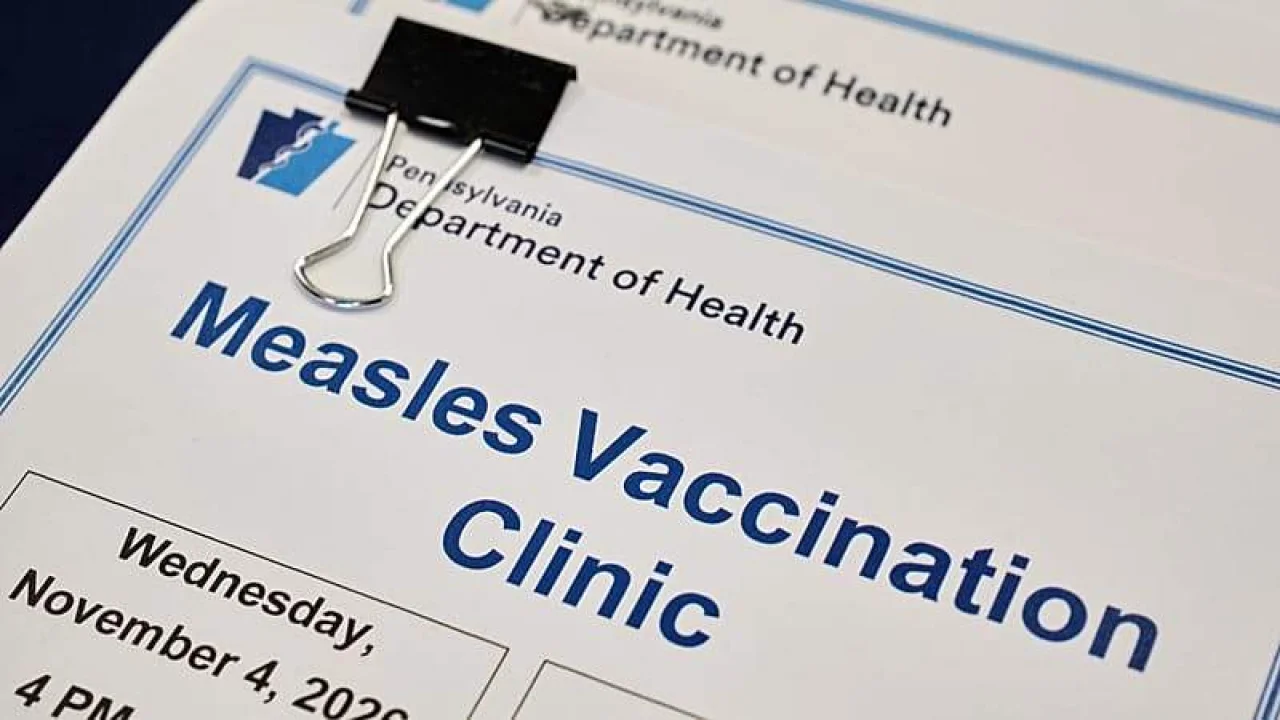
Pennsylvania has carried the worst of the outbreak. Its health department reported 1,487 cases and 287 hospitalizations, along with six deaths. South Carolina recorded the next-highest total with 670 cases, followed by Utah with 536. A 7-month-old baby in New York died of measles, the state’s first measles death in more than 30 years. Wisconsin also reported the death of an infant. Across the country, 562 people have been hospitalized with measles this year, about 11 percent of all cases.
| Measles in US, 2026 — CDC figures | |
|---|---|
| Confirmed cases in 2026 | 5,182 |
| Cases in 2025 | 2,289 |
| Hospitalizations | 562 (11%) |
| Outbreaks reported | 43 |
| Cases in unvaccinated people | 96% |
| Pennsylvania cases | 1,487 |
| Pennsylvania deaths | 6 |
| South Carolina cases | 670 |
| Utah cases | 536 |
US Elimination Status at Risk
Next week, a panel of health experts will decide whether the United States can still call itself free of measles. The Pan American Health Organization’s expert commission meets from November 10 to 13 to review American data. If it finds that one strain of the virus has spread without a break for 12 months, the country loses a status it has held since 2000. Losing it would not change daily life overnight, but it would mark a major setback for public health and a warning that the virus is back to stay unless vaccination rates recover.
Why Death Count Differs
The CDC has recorded four measles deaths in 2026. State health departments have reported at least eight. The gap comes from different counting rules. Pennsylvania counts a death as measles-associated when a person with confirmed measles dies within 30 days of developing symptoms. The CDC, under Health Secretary Robert F. Kennedy Jr., switched to mortality data from the National Center for Health Statistics. In August, the CDC removed two Pennsylvania deaths from its national tally after Kennedy questioned whether measles had caused them. The CDC says it is working with state epidemiologists to agree on one shared definition. Pediatric infectious disease specialist Adam Ratner told AFP the deaths were “tragic, and that is completely preventable.”
Before the measles vaccine arrived in 1963, the disease killed an estimated 400 to 500 people in the United States every year. The vaccine changed that. Two doses of the MMR vaccine protect about 97 percent of people who receive them. The 2026 numbers show what happens when coverage slips: the virus finds the gaps, and children pay the highest price.
Measles spreads through the air when an infected person coughs or sneezes. The virus can linger in the air for up to two hours, and one infected person can pass it to many people who have no immunity.
People who have not been vaccinated face the highest risk, above all young children. In 2026, about 59 percent of US cases were in children and teenagers, and 908 cases were in children under age 5.
The MMR vaccine prevents measles. Two doses protect about 97 percent of people. High vaccination coverage across a community stops the virus from spreading and protects babies too young to be vaccinated.