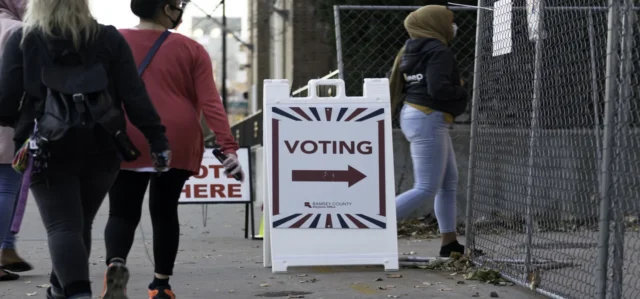
National polling puts Democrats ahead in the final days of the US midterm elections 2026, while several Senate races remain close enough to decide control of Congress after voting on November 3.
The national lead matters less than the state races, because Senate control is decided state by state, not by the national vote total. A party can lead nationally and still lose the Senate if it loses enough close state races.
A national polling average put Democrats at 51.4 percent and Republicans at 43.2 percent on the generic congressional ballot, a gap of 8.2 points. That is a snapshot of mood from recent surveys, not a forecast of the result, because a generic ballot question asks voters which party they would support in general, rather than naming a candidate in their own state.
A Reuters/Ipsos survey from October 22 to 26, among 1,679 adults including 1,280 registered voters, found registered voters favouring Democrats over Republicans by 47 percent to 36 percent. With undecided voters’ leanings counted, the lead was 50 percent to 41 percent, and among voters judged most likely to vote it was 53 percent to 44 percent.
The same survey put President Donald Trump’s approval rating at 32 percent, and 73 percent of adults said the cost of living was moving in the wrong direction. For voters, the cost of living was the issue both parties tried to own in the final days, with Democrats linking economic pressure to the administration and Republicans arguing their candidates would change the direction of policy.
In Texas, Democrat James Talarico and Republican Ken Paxton are in a close contest. In Michigan, Democrat Abdul El-Sayed leads Republican Mike Rogers. In Kansas, Republican Senator Roger Marshall faces a competitive challenge from Democrat Adam Hamilton. In Alaska, a legal dispute involving two candidates named Dan Sullivan has raised questions about whether the Senate result there could be delayed.
President Trump campaigned in South Carolina for Republican Senate candidate Darline Graham, who faces Annie Andrews, and his Kansas and Iowa schedule changed in the final week from telephone rallies to in-person events. Former President Barack Obama and former Vice President Kamala Harris campaigned for Democrats, while Vice President JD Vance campaigned for Republicans.
The November 3 vote will decide control of the House of Representatives and the Senate for the next two years. Control of Congress shapes what a president can pass, what nominations can move forward, and how much oversight the opposition can exercise.
Turnout will be decisive in the closest states. Polls measure intention, but they do not vote, and the gap between registered voters and likely voters in the Reuters/Ipsos survey shows why campaigns pushed hard in the final weekend to turn supporters into actual voters. Some close races may take longer to call if margins are tight or counting is disputed.