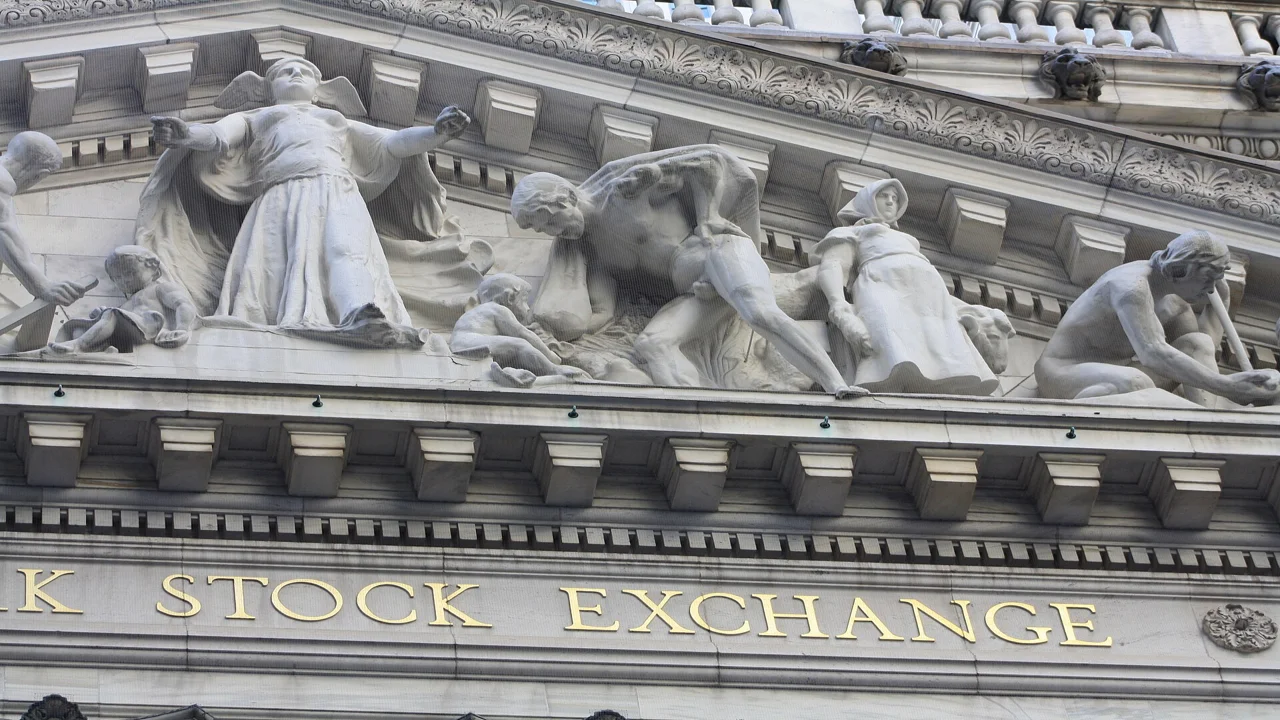
Wall Street suffered its worst trading day since June on Friday, October 30, as technology shares lost more than $1 trillion in market value and investors questioned whether huge spending on artificial intelligence will ever pay off.
The rout matters because it hit the very companies that have driven the market higher all year, and it came just days before Americans vote in Tuesday’s midterm elections, when the state of the economy is already a central issue.
The Nasdaq Composite sank 747.73 points, or 2.86 percent, to close at 25,437.00, according to market data reported by the Associated Press. The broader S&P 500 fell 140.32 points, or 1.82 percent, to 7,580.07, completing a third consecutive losing week, while the Dow Jones Industrial Average lost 572.25 points, or 1.09 percent, to 51,770.31.
Technology bore the brunt of the selling. The Nasdaq 100 fell 3.4 percent during the session, moving close to correction territory, which traders define as a fall of 10 percent or more from a recent high. Friday’s drop left the Nasdaq roughly 8.5 percent below its recent record high and on course for its worst monthly performance since March 2025.
Chipmakers were among the hardest hit. SanDisk dropped about 13 percent, while Advanced Micro Devices, Arm Holdings, Qualcomm and Marvell each fell around 10 percent, and the Philadelphia Semiconductor Index sank 7.2 percent. Nvidia, the world’s most valuable chipmaker, fell about 4.2 percent, and Micron declined 5.3 percent.
Intel plunged 29 percent on Friday after warning that fourth-quarter profits and sales would fall short of expectations, its worst single day since 1974. The fall capped a brutal week for the chipmaker, whose shares had already dropped sharply in late trading on Thursday after its revenue forecast disappointed analysts.
Alphabet, the parent company of Google, had set the tone a day earlier. Its shares fell roughly 13 percent on Thursday, October 29, wiping out about $500 billion in market value in its worst day on record, after its quarterly profit missed Wall Street expectations and investors fretted over its rising AI costs.
Amazon also came under pressure after reporting higher-than-expected AI infrastructure spending alongside slower growth in its core online shopping business. Its shares slumped 7.3 percent in extended trading on Thursday before recovering some ground to close Friday down 1.4 percent. Chief Executive Andy Jassy told shareholders on Thursday that the company still expects 2026 capital spending of approximately $220 billion, most of it going to its Amazon Web Services cloud division.
Analysts said the common thread was a demand for proof. “Investors are demanding proof that the AI boom will translate into profits rather than simply into higher capital budgets,” market reports summarised after Friday’s session, as earnings from the biggest technology companies failed to reassure shareholders who had already priced in years of rapid growth.
The sell-off spilled beyond the United States. South Korea’s Kospi index fell between 3.5 and 3.7 percent as memory chipmakers Samsung Electronics and SK Hynix declined, while Japan’s Nikkei 225 dropped 2.1 percent after the Bank of Japan held interest rates steady. Money moved into safer assets, with the yield on the 10-year US Treasury easing from 4.98 percent late on Thursday to 4.93 percent.
Digital assets fell alongside stocks rather than acting as a hedge. Bitcoin dropped below $77,400, total cryptocurrency market capitalisation fell 7.3 percent to $2.604 trillion, and forced liquidations reached about $1.49 billion in 24 hours, according to CoinGlass data cited in market reports.
Two broader forces had already cooled appetite for risk before the earnings disappointments. On Wednesday, October 28, the Federal Reserve held its benchmark interest rate steady at a range of 3.75 to 4.00 percent, but two policymakers dissented in favour of a rate rise, a signal that borrowing costs may stay higher for longer.
Just weeks earlier, the picture had looked very different. Strong corporate results had lifted the S&P 500 to an all-time high earlier in October, with third-quarter earnings for the index estimated up 30.2 percent and 82 percent of reporting companies beating expectations, according to market data.
Major Wall Street banks remain divided on where the market finishes the year. Citigroup and UBS maintain year-end S&P 500 targets of 8,100, while Goldman Sachs, Morgan Stanley and JPMorgan hold targets of 8,000. Bank of America projects a lower year-end close at 7,400.
What is confirmed is the scale of Friday’s losses and the trigger: disappointing earnings and guidance from Alphabet, Amazon and Intel, layered on top of already heavy AI spending. What remains uncertain is whether the pullback is a healthy reset after a long rally or the start of a deeper correction, a question that will be tested by the next round of corporate results, economic data and Tuesday’s midterm elections.