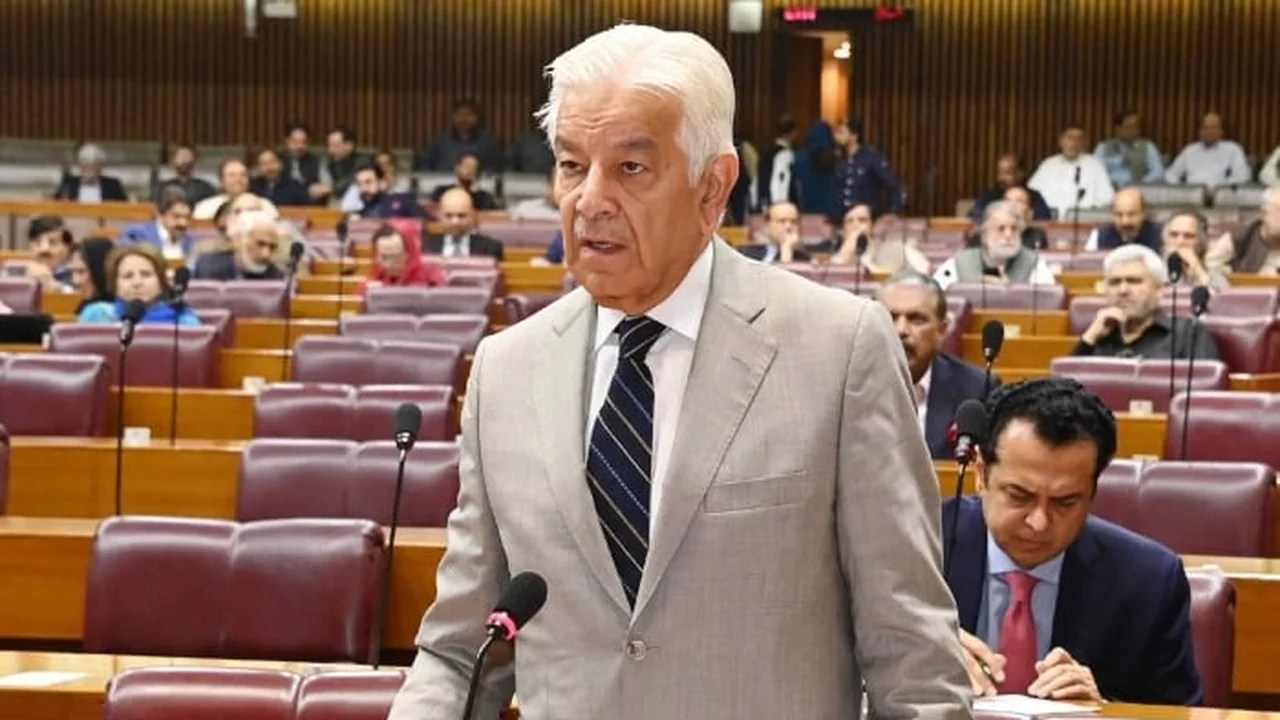
Defence Minister Khawaja Asif has backed the idea of creating new provinces in Pakistan, saying the country could have as many as 12 if the new units are drawn on administrative grounds and not on the basis of language, ethnicity or politics.
Speaking to Geo News in Sialkot on Sunday, Asif said the proposal had been under discussion for the past two months, with views coming in from across the country. His remarks add a senior federal voice to a debate that has grown louder over the past few days, after reports that the government is considering a plan to redraw Pakistan into 12 provinces through a possible 28th Constitutional Amendment, with a nationwide referendum held first.
“If there is a proposal for 12 provinces, then make it 12, but they should not be created on the basis of language, ethnicity or political interests,” Asif said.
Asif Case for Smaller Provinces
Asif argued that Pakistan’s growing population needs smaller administrative units so that public services can reach people more easily. At present, he said, too much power sits in the four provincial capitals — Lahore, Karachi, Quetta and Peshawar — while people in smaller towns and far-off districts wait for decisions made far away.
He also questioned how money flows in the country. Funds sent by the federal government, he said, largely stay under the control of provincial administrations instead of reaching local government bodies. Those local bodies, which are supposed to spend the money on streets, water, sanitation and basic services, remain dependent on provincial governments for both funds and authority.
Asif urged politicians to change how they think about power. “We politicians want to exercise all the power ourselves,” he said, adding that leaders must remember that authority is a trust given to them by the people.
To make his point, Asif looked back at Pakistan’s own history. He recalled the One Unit scheme, under which all provinces of West Pakistan were merged into a single administrative unit before the arrangement was later abolished. He also pointed to Afghanistan, where the number of provinces rose from around eight or 10 to more than 30.
The idea was first put forward by his cabinet colleague, Interior Minister Mohsin Naqvi. Planning Minister Ahsan Iqbal had also proposed in September that Pakistan could have 12 to 15 provinces, and called for a national debate on administrative reform.
Proposed 12-Province Split
Media reports suggest the proposed restructuring could divide Punjab into four provinces, Khyber Pakhtunkhwa and Balochistan into three each, and Sindh into two. Together, that would make 12 provinces.
Sources familiar with the proposal told The News that the amendment could be taken up in the first half of 2027, with preparatory steps possibly beginning in the first quarter. But no final decision has been taken on provincial boundaries, administrative structures or the constitutional process, and the government has not announced a formal plan or timetable.
Creating new provinces would not be a simple step. Under the Constitution, changing a province’s boundaries needs a two-thirds majority in Parliament, along with approval by a two-thirds majority of the provincial assembly concerned. That is why reports also speak of a nationwide referendum before any move toward a 28th Constitutional Amendment.
In simple words, the proposal is still at the discussion stage. Nothing has been approved, no map has been finalised, and no new province exists yet. What has changed is that the debate is now out in the open, with federal ministers speaking about it on the record.
MQM-P Renews Sindh Demand
While Asif spoke in Sialkot, the Muttahida Qaumi Movement-Pakistan (MQM-P) renewed its own demand for new administrative units in Sindh. The party held a high-level meeting of its political and administrative leadership at its Bahadurabad headquarters in Karachi, chaired by convener and Federal Minister Dr Khalid Maqbool Siddiqui.
According to a press release, the meeting discussed a strategy to address long-standing grievances of urban Sindh, speed up Karachi’s development, and prepare for upcoming local government elections. The party said new administrative units were essential to give power to people at the grassroots level and to ensure fair provision of basic municipal services.
Dr Siddiqui said ending the deprivation of urban Sindh, establishing new administrative units and winning the local government elections were among the party’s foremost priorities. He added that no political or administrative obstacle would be allowed to stand in the way of public welfare and development.
Road Ahead for Proposal
The coming weeks will show whether the debate turns into a formal plan. For now, the proposal remains under consideration, and supporters say its aim is better governance — power closer to the people, faster decisions, and a fairer share of development funds across the country.
Critics will want to see details: where exactly the new boundaries would fall, how the new units would be funded, and whether the move would need support from provincial assemblies that may not want to give up territory. Until a draft amendment or an official announcement appears, the 12-province idea remains a proposal, not a decision.
What is clear is that the conversation has moved from closed rooms to public statements. With a defence minister and a planning minister both speaking in favour, and a major party in Sindh pressing its own demand, the question of new provinces is now firmly part of Pakistan’s political debate.
Key Facts
| Who spoke | Defence Minister Khawaja Asif |
| Where and when | Geo News interview, Sialkot, Sunday 8 Nov 2026 |
| Proposal | Up to 12 provinces in Pakistan |
| Basis | Administrative needs only — not language, ethnicity or politics |
| Reported split | Punjab 4, Khyber Pakhtunkhwa 3, Balochistan 3, Sindh 2 |
| Constitutional route | Possible 28th Constitutional Amendment |
| Referendum | Nationwide referendum contemplated before amendment |
| Possible timing | Amendment could be considered in first half of 2027 |
| First proposed by | Interior Minister Mohsin Naqvi; Ahsan Iqbal proposed 12–15 in September |
| MQM-P demand | New administrative units in Sindh; ending deprivation of urban Sindh |
| Status | Under discussion — no final decision, no approved plan |
FAQs
Q: Can Pakistan create 12 provinces right away?
A: No. Creating new provinces needs a constitutional amendment, which requires a two-thirds majority in Parliament and approval from the provincial assembly concerned. Reports also mention a nationwide referendum first. No final decision has been taken yet.
Q: Which provinces would be divided under the reported plan?
A: Under the reported proposal, Punjab would be split into four provinces, Khyber Pakhtunkhwa and Balochistan into three each, and Sindh into two, making 12 in total. These boundaries are not final.
Q: Why does Asif oppose creating provinces on ethnic lines?
A: Asif says new units should be drawn for better administration and public services, not on the basis of language, ethnicity or political interests. He argues that power should move closer to the people instead of staying locked in provincial capitals.