Prime Minister Shehbaz Sharif has briefed PML-N President Nawaz Sharif on a new security plan for Khyber Pakhtunkhwa, built around faceless anti-terrorism courts and a Rs70 billion boost for the police and the Counter-Terrorism Department. The two leaders met at Jati Umra in Lahore on Sunday, weeks after the federal government imposed emergency and governor’s rule in the province.
Faceless Courts Shield Judges, Witnesses
The centrepiece of the plan is a new kind of court for terrorism cases. In a faceless court, the judge, the prosecutor, the witnesses and the police officers are known by a title or a code, not by their names. Their faces and identities stay hidden through the trial.
The idea is simple. People who saw a terror attack often refuse to testify, because they fear the attackers will come after them and their families. Judges and prosecutors face the same risk. When no one will speak in court, cases drag on for years or fall apart. Faceless courts aim to break that fear, so trials can move faster and reach a verdict.
KP Home Secretary Amjad Ali Khan told a briefing at the Governor House in Peshawar on Sunday that an amendment to set up these courts has already been sent.
“So, we have recently sent the amendment to set up faceless anti-terrorism courts. Through this, not just the protection of witnesses, but that of prosecutors and judges will also be ensured,” he said.
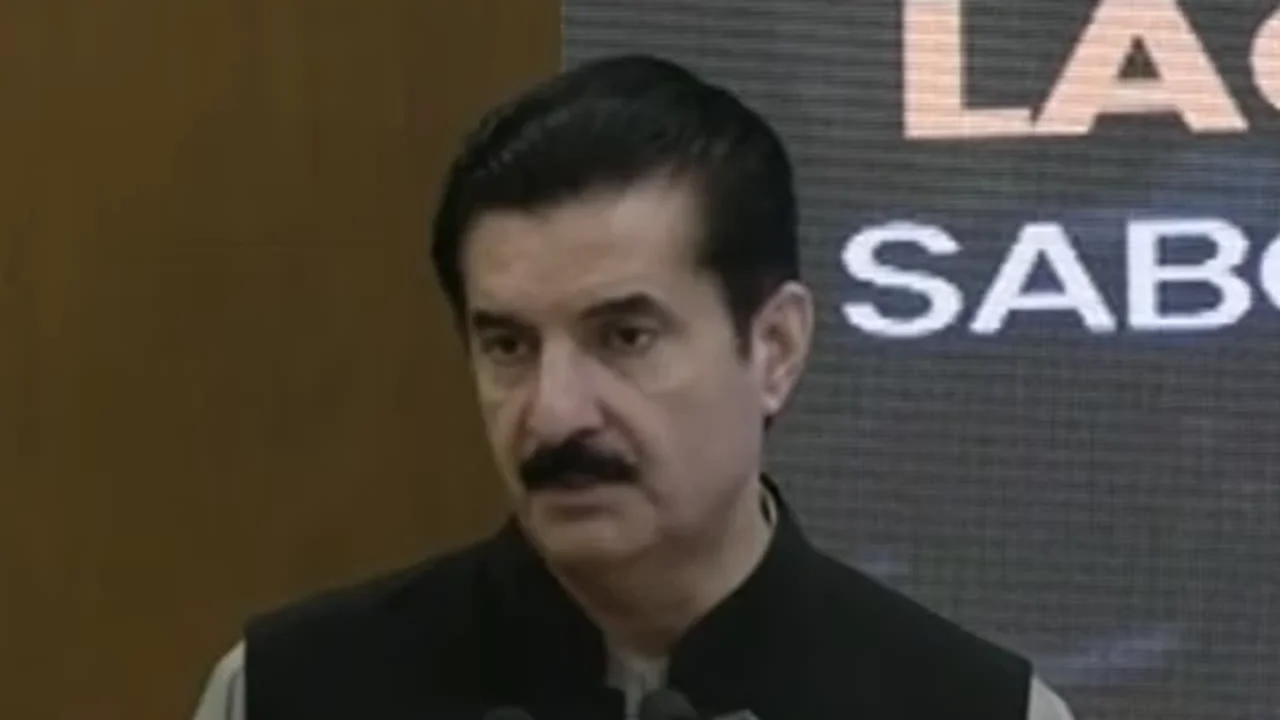
Governor Faisal Karim Kundi, who attended the briefing, said restoring peace and strengthening the police are the administration’s top priorities. He also made clear that there will be no talks with armed groups.
“It is very clear that whoever does not accept our state, Constitution and laws, cannot be engaged in dialogue. Anyone who takes up arms against the state cannot be offered dialogue, will be responded to accordingly,” he said.
Rs70bn Funding Breakdown
The plan, called Stronger Khyber-Pakhtunkhwa, sets aside Rs70 billion a year for security. The police get Rs59.8 billion and the Counter-Terrorism Department gets Rs10.3 billion. Most of the money goes to buildings and equipment: the police share splits into Rs33.4 billion for infrastructure and Rs26.4 billion for procurement, while the CTD share splits into Rs5.4 billion for infrastructure and Rs4.9 billion for procurement.
The money is needed because the force is stretched thin. The police are short of 10,587 personnel and the CTD is short of 638 officials. Only 3.2 per cent of the budget went to security in the merged districts. The CTD was raised in 2014, yet it has purpose-built buildings in only 12 districts, and its counter-drone systems run at just 12 per cent capacity.
The plan sets clear targets. Police surveillance should rise from 15 per cent to 60 per cent, and night operations from 18 per cent to 50 per cent. Police stations will be fortified, with a target of 75 per cent fortification capacity. Anti-drone systems will be set up in Dera Ismail Khan, Lakki Marwat and Bannu. District Nerve Centres will open in 10 districts, and the Safe City project will be extended. The CTD will expand its work to all 34 districts of the province.
New tools are part of the package too. Satellite systems will cover remote areas, artificial intelligence will watch social media, and personnel will get anti-drone and sniper training. On the ground, intelligence-based operations will be scaled up, along with area sanitisation, arrests of facilitators, re-checks of people on the Fourth Schedule watch list, and Rapid Response Force mobilisation.
Why KP Plan Matters Now
The plan lands after a heavy toll. Between 2024 and September 2026, 1,003 members of the armed forces, 627 police personnel and 808 civilians were killed in the war against terrorism, while 3,788 terrorists were killed in the same period. Those numbers were shared at the briefing, and they explain why the government says the old approach was not working.
The political background matters as well. The federal government imposed emergency and governor’s rule in KP on 11 October, saying the PTI-led provincial government had deliberately stepped back from the fight against terrorism. The chief minister and cabinet ceased to hold office, and Governor Kundi took charge with an 11-member advisory council. Nawaz Sharif told the meeting the intervention should have come much earlier, while Shehbaz Sharif said the federal government was compelled to act over security concerns.
The home secretary accused the former provincial set-up of lacking political ownership, saying the armed forces and police had rendered many sacrifices while the administration failed to own them. Governor Kundi added that even senior political figures like Maulana Fazlur Rehman face restrictions on movement in some areas, which is why intelligence-based operations remain necessary.
There is also a funding fight behind the plan. Kundi admitted the centre may not have paid the full Rs100 billion a year promised for the merged districts, and said the set-up is pressing for it. Around 70 per cent of the new Rs70 billion is earmarked for the merged districts and the 12 districts facing the worst security problems.
What happens next is now in two hands. The faceless-courts amendment must pass, and the money must actually reach the police and the CTD. If both happen, KP will have better-protected courts, better-equipped police and a much larger counter-terrorism footprint. If either stalls, the plan stays a promise on paper, and the province’s security problems will not wait.
Key Facts
| Fact | Detail |
|---|---|
| Meeting | PM Shehbaz Sharif briefs Nawaz Sharif, Jati Umra, Lahore, Sunday 8 Nov 2026 |
| Plan | Stronger Khyber-Pakhtunkhwa |
| Faceless courts | Amendment sent; judges, prosecutors, witnesses, police identified by code, not name |
| Total funding | Rs70bn a year |
| Police share | Rs59.8bn (Rs33.4bn infrastructure, Rs26.4bn procurement) |
| CTD share | Rs10.3bn (Rs5.4bn infrastructure, Rs4.9bn procurement) |
| Staff shortfall | Police 10,587; CTD 638 officials |
| Casualties 2024-Sept 2026 | 1,003 armed forces, 627 police, 808 civilians killed; 3,788 terrorists killed |
| Governor’s rule | In force since 11 Oct 2026 |
| Anti-drone systems | Dera Ismail Khan, Lakki Marwat, Bannu |
| CTD reach | All 34 districts |
| Merged districts security share | 3.2% of budget |
Frequently Asked Questions
What are faceless anti-terrorism courts?
Faceless courts are special courts for terrorism cases where the judge, prosecutor, witnesses and police officers are identified by a title or code instead of their names. Their identities stay hidden so militants cannot target them. KP has sent an amendment to set up such courts, aiming for faster trials in terror cases.
How much money will KP police and CTD get?
Rs70 billion a year under the Stronger Khyber-Pakhtunkhwa plan. The police get Rs59.8 billion and the Counter-Terrorism Department gets Rs10.3 billion, split between buildings and equipment. Around 70 per cent of the money is earmarked for the merged districts and the 12 districts hit hardest by militancy.
Why is KP under governor’s rule?
The federal government imposed emergency and governor’s rule in KP on 11 October 2026, saying the PTI-led provincial government had deliberately disengaged from the fight against terrorism. The chief minister and cabinet ceased to hold office, and Governor Faisal Karim Kundi took charge with an 11-member advisory council.