


Do you want to add an FAQ schema to WordPress?
Adding an FAQ schema can help boost your SEO ranking and organic click-through rate as your FAQs appear directly in Google search results.
In this article, we will show you how to add a WordPress FAQ schema and improve your ranking step by step.

What is a FAQ schema?
An FAQ schema is intelligent markup code, also known as structured data, that you can add to your website pages to help Google identify the FAQ section.
If you add an FAQ schema, Google may reward you with an expanded list of search results that also displays the FAQ directly below your WordPress website title.
Here is an example of an answer to a frequently asked question. Google shows the questions and you can click the down arrow to see the answers.

Increased visibility on Google means more traffic to your website. It also makes your blog authoritative in this area.
In addition, the FAQ schema makes your content more useful to users who prefer a Q&A approach.
With the help of the FAQ scheme, you can control the questions and answers. You can customize the content the way you like. You can even add emoji to boost your organic click through rate (CTR).
Your FAQs can also show up in Google’s “People Also Ask” boxes, which is another potential visibility boost.
These fields appear for many search queries and offer a list of additional questions, each linked to a website for more information.
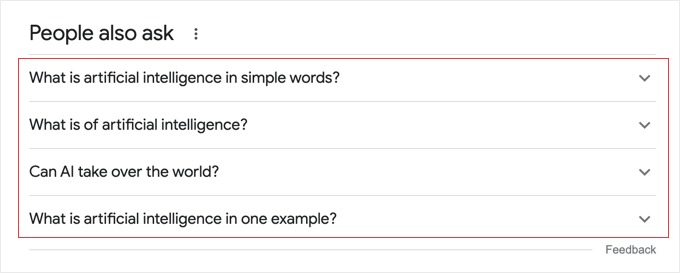
However, it is important to note that adding a WordPress FAQ schema does not guarantee that your FAQs will appear on Google. However, it will increase your chances of getting noticed.
FAQ Schema Guide
Before you add an FAQ schema to your pages and posts, it’s important to understand Google content recommendations.

You should only use the FAQ schema if your page has a list of questions with answers. If your page has only one question, you should use Quality Control Scheme instead of.
You must not use the FAQ schema for promotional purposes or for questions and answers that contain violent, obscene, hateful, dangerous or illegal language.
If the same question and answer appears multiple times on your page, it’s important to add the FAQ outline only once.
The questions and answers in the FAQ should also appear in your page content.
Finally, make sure that each question includes the entire text of the question, and each answer includes the entire text of the response.
How to Add an FAQ Schema in WordPress
The easiest way to add an FAQ schema to WordPress is to install a plugin that does it for you, but you can also do it without a plugin.
We’ll cover both options and you can use the quick links below to jump to the method you want to use:
Table of contents
Method 1: Adding a WordPress FAQ Schema with All-in-One SEO
The best way to add an FAQ schema in WordPress is All in One SEO Pro plugin. It is the best SEO plugin for WordPress and is used by over 3 million websites.
The first thing you need to do is install and activate the plugin. Read more in our WordPress plugin installation guide.
Note: There is a free version of All in One SEO available, but you need the premium version to add FAQ schema in WordPress.
Upon activation, the plugin will launch the installation wizard. You can follow the on-screen instructions to set it up. If you need more help, check out our guide on how to set up All-in-One SEO for WordPress the right way.

Once you’ve completed the setup, you’ll be returned to your WordPress dashboard.
You can see the new All in One SEO menu item in the admin sidebar.
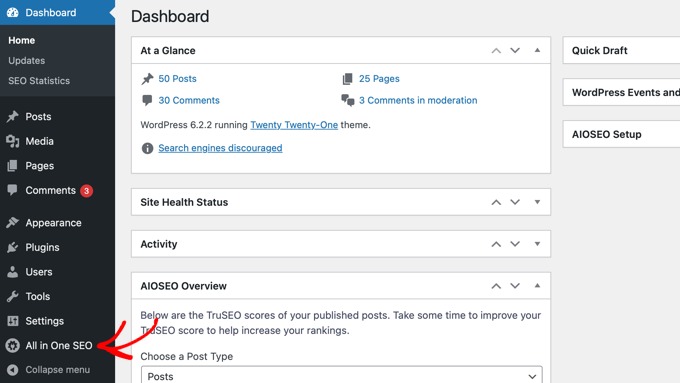
If you had the free version of All in One SEO installed, then all your settings will be automatically transferred to the Pro version. The free version will be automatically deactivated.
Now that All in One SEO is installed and activated, you need to go to the page or post where you want to add the FAQ outline.
Just scroll down to the bottom of the content editor where you will see the AIOSEO settings.
When you click on the Scheme tab, you can see that the scheme settings are automatically enabled by default. You can then click the “Create Scheme” button to customize it.

The schema directory will open, where you can select the type of schema you want to implement.
Next, you need to find the FAQ option and click the “Add Schema” button next to it.
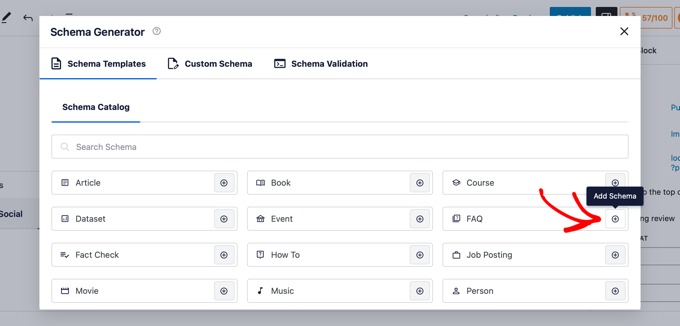
Now you can start entering information about frequently asked questions.
Start by adding a name and description for your page or post. You can even use AIOSEO’s simple emoji picker to add emoji to these fields.

After that, you should scroll down to start adding the “Question” and “Answer” fields for your first FAQ question.
You can also click the “Add Another Question” link to add more questions.

When you’re done, don’t forget to click the “Add Scheme” button.
If you want to check if your FAQ schema markup is added correctly, scroll down to our section on how to check wordpress faq schema.
Method 2: Adding a WordPress FAQ Schema Without a Plugin
If you want to add a WordPress FAQ schema without a plugin, you can do so using our manual code method.
First, you will need to generate the FAQ schema code. You can do it with JSON-LD Schema Generator FAQ Page.

Start by adding questions and answers on the left side of the tool. You can click “Add another FAQ” to add as many questions as you need.
As you type, the schema markup will update on the right.
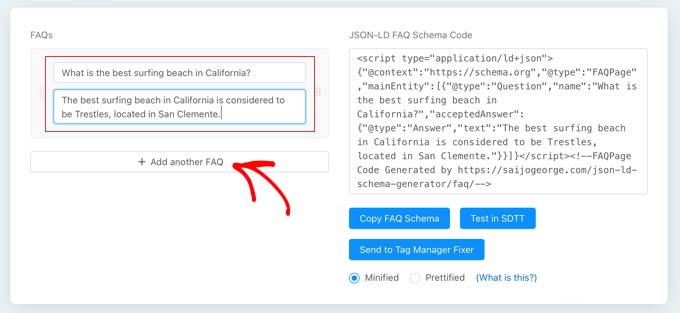
Your next step is to paste the code you just created into WordPress. Just click “Copy FAQ Schema” to copy the code.
After that, go to the page or post where you want to add the FAQ outline.
If you’re using the block editor, you’ll need to add a Custom HTML block and paste the FAQ schema markup into it.

If you’re still using the old classic editor, you’ll need to switch to a text editor.
You can then paste the schema markup at the bottom of your post.
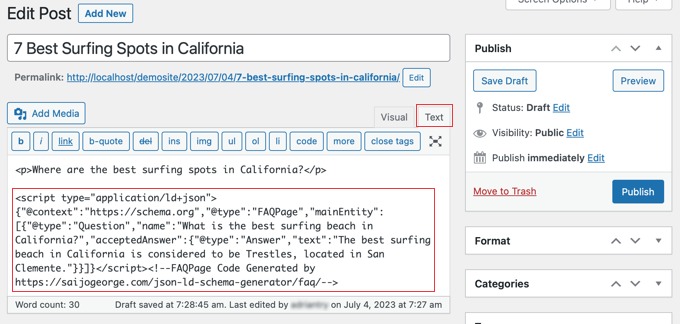
When you’re done, just click the Update or Publish button to save your changes.
Testing Your WordPress FAQ Schema
Because your FAQ schema code is specifically for Google, you can’t tell if it’s working just by looking at your page.
To check if the FAQ schema markup is correct, you can use Google Extended Test Results page. Simply enter the URL of the FAQ page and click “Check URL”.
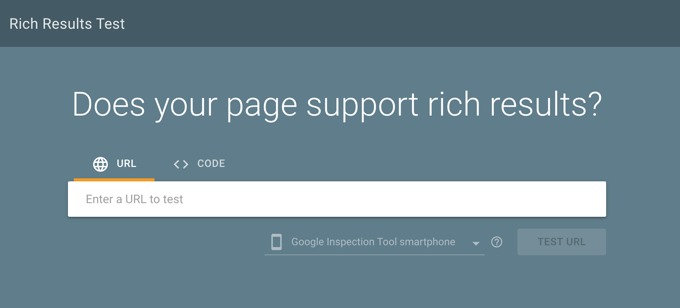
Google will parse your page for all kinds of schema markup, not just FAQ schemas. You may see multiple results if your page uses other schema types.
When the text is ready, expand the results under the heading “Frequently Asked Questions”.

You should see the actual question and answer pairs you added to your FAQ section. If they are correct, then you are all set.
If they are incorrect, you will need to go back and double-check that you have configured the FAQ schema correctly.

If the correct items are still not showing up, we recommend clearing the WordPress cache as caching plugins can display an outdated Google version of your content.
We hope this article helped you learn how to easily add a WordPress FAQ schema. You can also check out our complete WordPress SEO guide to improve your rankings and our expert selection of the best social media plugins for WordPress.


