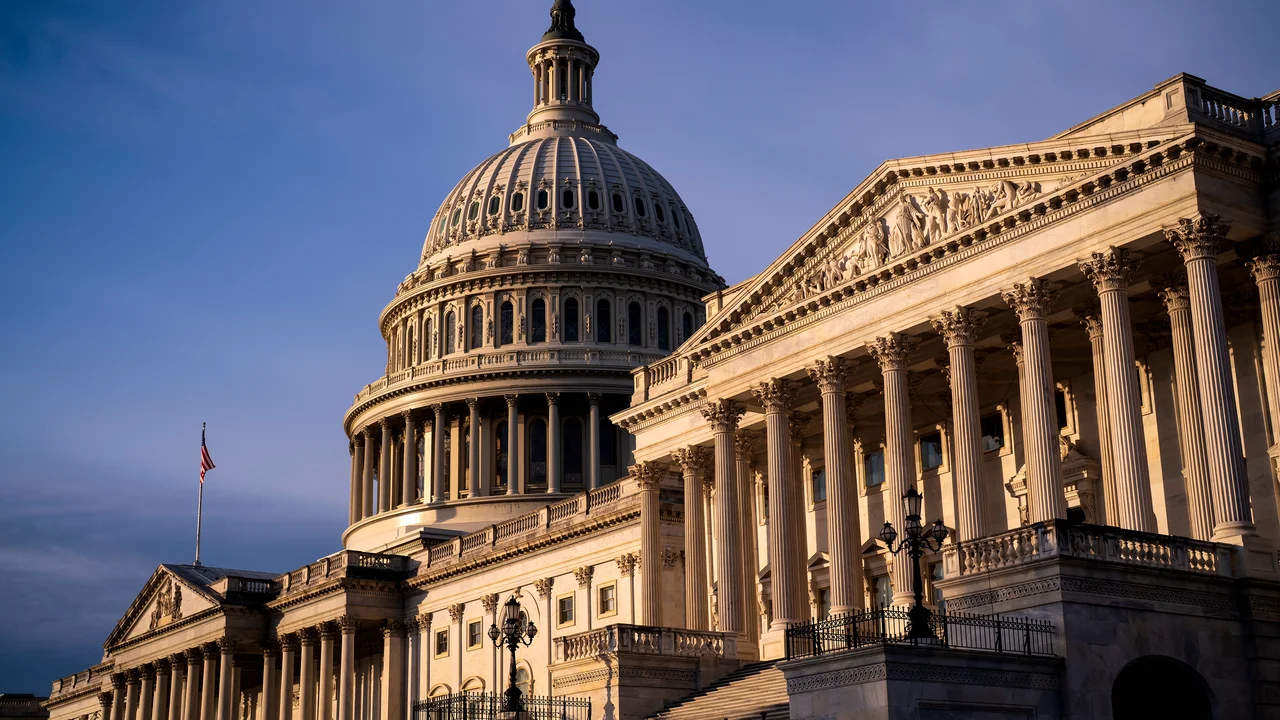
Democrats have won control of Congress in the United States midterm elections, taking both the Senate and the House of Representatives from the Republicans.
| Chamber | Democrats | Republicans | Uncalled |
|---|---|---|---|
| Senate | 54 | 44 | 2 (Alaska, Mississippi) |
| House | 218+ (counting continues) | — | — |
Senate: at least 54-44
The Associated Press called Democratic control of the Senate at 11:36 p.m. Eastern on Tuesday, 3 November, and called the House early on Wednesday morning, at 1:24 a.m. NBC News also projected both chambers for the Democrats on election night.
In the Senate, Democrats hold at least 54 of the 100 seats, against 44 for the Republicans, with races in Alaska and Mississippi still uncalled. The majority could still grow to 56-44. Democrats flipped seven Republican-held Senate seats: Iowa, Kansas, Ohio, Maine, North Carolina, South Carolina and Texas.
The Texas result was the night’s biggest shock. James Talarico defeated Republican Ken Paxton, winning the state’s first Democratic Senate seat since 1988 and ending a decades-long losing streak. Kansas elected its first Democratic senator since the Great Depression, and in South Carolina, a state Donald Trump carried by nearly 18 points in 2024, Democrats defeated his hand-picked Senate candidate.
House: past 218
In the House, Democrats crossed the 218 seats needed for a majority in the 435-member chamber. NBC News projected they would finish with about 255 seats, a figure that could still shift by a few seats as counting continued.
Why Democrats won
Voter anger over the cost of living and the war with Iran drove the result. House Democratic Leader Hakeem Jeffries, on track to become the first Black speaker of the House, said the incoming majority would focus on affordability and accountability. “We don’t work for Donald Trump,” he told reporters.
Trump accepted the outcome. “I am absolutely willing to accept those results,” he told The New York Times. He acknowledged the war with Iran had played a role in his party’s losses but stood by the decision, and said he would work with Democrats on issues such as immigration while warning he had the power of veto.
What happens next
The change does not take effect at once. The new Congress begins on 3 January, when Democrats will run the committees in both chambers, set the legislative agenda and gain far more leverage over legislation, investigations and presidential appointments.