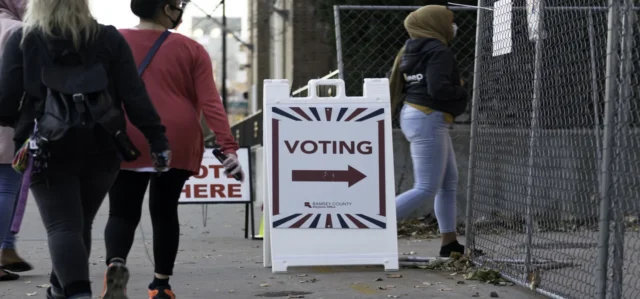
Federal prosecutors have escalated a criminal investigation into Alaska’s Senate race, issuing a wave of new grand jury subpoenas and asking a court to isolate ballots just days before voters head to the polls in the November 3 midterm elections.
The escalation matters because Alaska’s Senate contest is one of the most closely watched races of the midterm cycle, and because control of the Senate for the final two years of President Trump’s presidency could hinge on a handful of seats. The timing has itself become part of the story, since the department has historically avoided overt investigative steps against candidates in the weeks before an election.
According to the Associated Press, subpoenas seeking grand jury testimony or documents, along with demands to preserve records, were issued on Thursday, October 29, with more expected to follow. A person familiar with the matter told the news agency that neither the recipients nor the total number of subpoenas was immediately clear, and the source spoke on condition of anonymity because they were not authorised to discuss the ongoing inquiry publicly.
At the centre of the inquiry is an unusual twist on Alaska’s ballot: two men named Dan Sullivan are running for the same Senate seat. Republican incumbent Dan S. Sullivan, who has held the seat since 2015 and is seeking a third six-year term, faces Democratic former Representative Mary Peltola, along with Daniel J. Sullivan Jr., a retired schoolteacher from the small fishing community of Petersburg, and a fourth candidate, Gerald Heikes.
Federal investigators have for months been examining allegations that Daniel J. Sullivan Jr. entered the race to confuse voters and siphon support away from the incumbent senator. The inquiry intensified after The New York Times reported that people working with Peltola’s campaign and Democratic operatives appeared to have been involved in recruiting the second Sullivan, an effort the newspaper said began in 2025, when aides were asked to compile a list of Alaskans named Dan Sullivan.
Peltola denied on Thursday that she knew anything about the effort to put Daniel J. Sullivan Jr. on the ballot. Her campaign has said it had no involvement in recruiting any candidate into the race, and the Democratic Senatorial Campaign Committee has likewise denied involvement. Daniel J. Sullivan Jr. has long denied that he is running at the Democrats’ behest and has said he had no contact with Peltola’s campaign.
President Donald Trump earlier in the week called for the criminal prosecution of Peltola and her campaign. Attorney General Todd Blanche, in a Fox News interview on Wednesday, declined to discuss any criminal investigation but accused Democrats of “cheating”.
On Friday, October 30, Alaska’s top federal prosecutor confirmed that a criminal investigation is under way. United States Attorney Michael Heyman told reporters in Anchorage that the investigation had been running for several months, but that the recent revelations had produced a “significant surge of law enforcement assets to Alaska”. Heyman would not say what potential crimes authorities are examining or who the targets of the investigation might be.
Separately, the Justice Department has pursued a parallel civil case. As part of a lawsuit filed last week, federal lawyers asked a judge to order Alaska election officials to preserve and segregate all ballots ranking Daniel J. Sullivan, so that investigators could examine whether any such ranking was the product of voter confusion. Department attorneys argued there is a “substantial risk” that the second Sullivan’s candidacy “will mislead voters and ultimately result in an electoral process that lacks integrity”. They requested a decision by Monday, the day before the election.
Under Alaska’s ranked-choice voting system, voters rank candidates in order of preference, and the process can take days to resolve if no candidate wins an outright majority in the first round. In August’s primary, Peltola received 49.5 percent of the vote, compared with about 41 percent for Senator Sullivan, setting up a competitive general election.