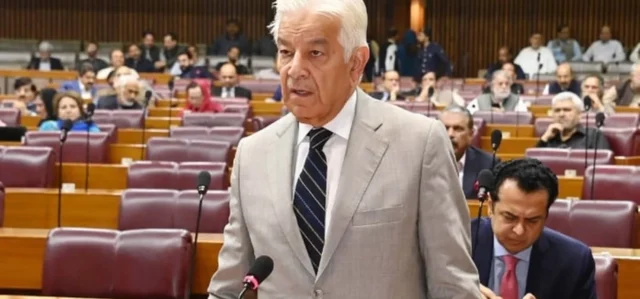
KARACHI: The Pakistan Peoples Party’s (PPP) decision not to accept resignations of Muttahida Qaumi Movement (MQM) ministers from the National and Provincial assemblies seems to have come good with the MQM deciding to resume its coalition with the PPP in government.
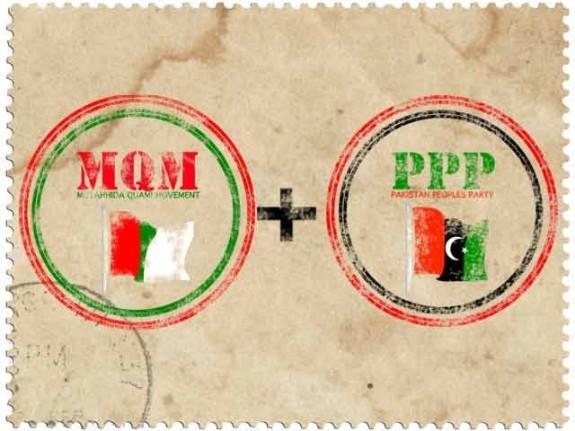 After much deliberated negotiations, Sindh Governor and senior MQM leader, Dr Ishratul Ebad announced at the Governor house in Karachi that the decision to rejoin the government had been taken in view of the immense challenges faced by the country.
He added that the MQM had not made any demands with respect to portfolios that would be accorded to ministers, that decision will be at the discretion of the PPP.
Ebad said that both President Asif Ali Zardari and MQM chief Altaf Hussain had been engaged in talks, and despite the air turning sour in the middle with some decision and actions, they were able to persevere and in the end reconcile their differences in the larger interest of the country.
Sindh Chief Minister, Qaim Ali Shah welcoming MQM’s decision to rejoin the government, said that the alliance between the PPP and the MQM had never suffered a breakdown, a few cracks had appeared but they were able to paper over them.
Shah said that the MQM members would return to the government in both the National and Provincial assemblies.
Referring to the law and order situation in the city, both Shah and Ebad said that their respective parties wanted lasting peace in the city and in the province and they had managed to do that.
The meeting in Governor House was attended by senior MQM members including Farooq Sattar, Babar Ghouri and Raza Haroon.
The PPP was represented by Khursheed Shah, Manzoor Wasan, and Agha Siraj Durrani.
Earlier an MQM delegation was due to meet leaders of the Pakistan Peoples Party (PPP) at Sindh Governor House, Express 24/7 reported.
Sources said that Raza Haroon, Sagheer Ahmed, Waseem Aftab, Farooq Sattar and Babar Ghauri from MQM would meet PPP leaders Khursheed Shah, Manzoor Wassan and Siraj Durrani at the meeting.
Sources also said that MQM’s reservations would be addressed during the meeting.
A final discussion regarding the MQM-PPP alliance was also likely to be brought up at the meeting.
The MQM had quit the ruling coalition at least three times, though the most recent spat with the ruling party appeared to be the most severe and certainly the longest that the MQM has spent on the opposition benches since the February 2008 elections.
While the most recent dispute was ostensibly over the PPP’s alleged request for a seat-adjustment arrangement in Azad Jammu and Kashmir elections, political analysts say that the MQM was not happy with the PPP’s constant delays over the reintroduction of the elected local government system in Sindh.