Taiwan went to the polls on Saturday to choose mayors and county chiefs across all 22 of its cities and counties, in a vote that will test party strength ahead of the island’s next presidential election in early 2028. Polls close at 4 p.m. local time, and results are expected in the early evening. China is watching the vote closely, even though China did not feature as a major issue in most campaigns.
Local issues such as transport and the environment dominated the campaigns. But the results will still be read as a first signal of where voters stand before the big national vote in 2028. That is why this local election matters far beyond town halls and county offices.
Taipei Race in Focus
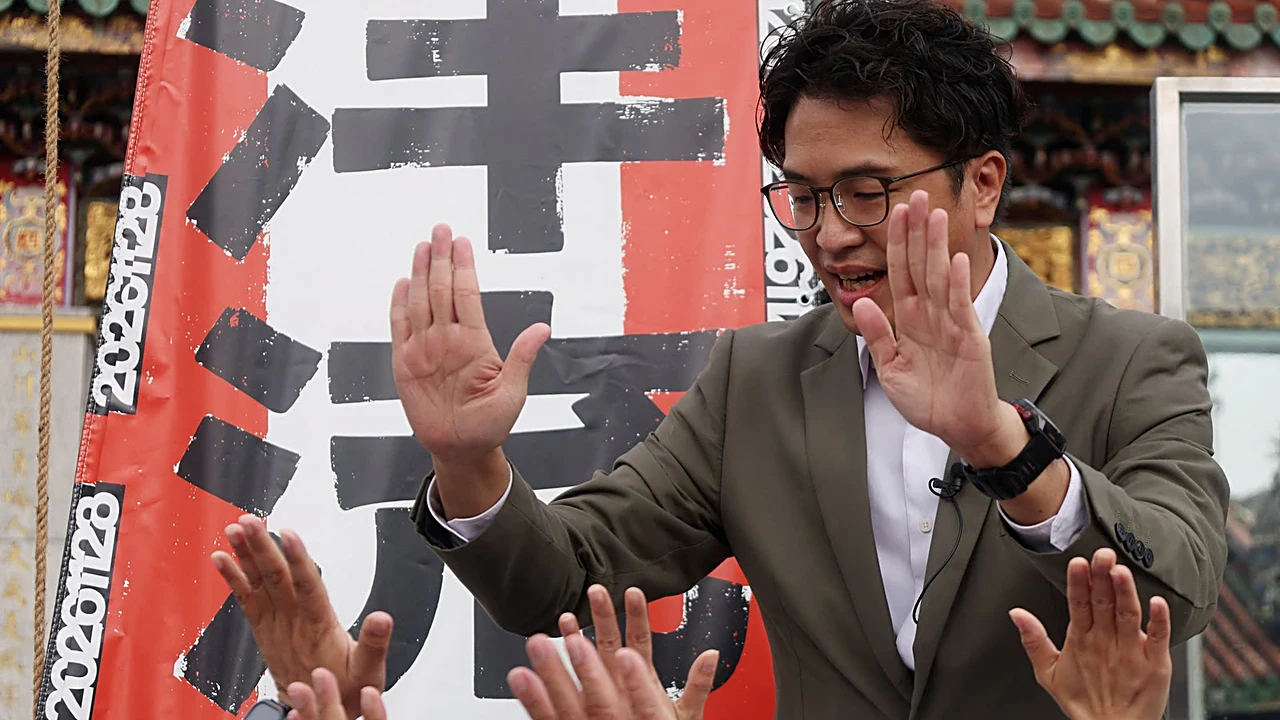
The race everyone is watching is for mayor of Taipei, the capital. Incumbent Chiang Wan-an, 47, from the opposition Kuomintang (KMT), is seeking a second term. His challenger is Puma Shen, 44, from the ruling Democratic Progressive Party (DPP) — an academic-turned-lawmaker who built his name as an expert on China’s information warfare.
Taipei has long been a KMT stronghold. The DPP has not held the mayor’s office there since 1994, nearly 30 years. Shen is trying to break that run, and recent voter surveys show him closing in on Chiang, or even slightly ahead. The race is now too close to call with confidence.
Both men spent the final day on the road. Chiang toured the city in an open-top jeep, waving to crowds, while Shen travelled by motorcade, stopping for short greetings along the way. Shen cancelled plans for a large evening rally over fears of traffic jams and instead held an online event with DPP leaders. A third party, the Taiwan People’s Party, is running in some smaller races and is backing the KMT candidate in Taipei.
China Factor Behind Vote
China claims Taiwan as its own territory, a claim Taipei rejects. Beijing has denounced Shen openly and Chinese police say he is wanted for “separatism”. Shen told Reuters this month that police in China had never contacted him, and that whoever wins in Taipei, the election itself would be a victory for democracy in the face of pressure from China.
The pressure was visible on Friday, the day before the vote. Taiwan’s Defence Ministry said it had detected 30 Chinese military aircraft operating around the island, 26 of which crossed the median line of the Taiwan Strait, in what it called a joint combat readiness patrol with warships. China’s Defence Ministry did not respond to a request for comment, but said on Thursday that “reunification” is an unstoppable trend.
Taiwan’s government also warned voters before the election to be careful about fake claims on social media, pointing to what it called continuous Chinese disinformation efforts.
What Results Mean for 2028
The vote will not change China policy directly. But it will shape the run-up to the presidential and parliamentary elections in early 2028, and the positioning for those races will begin in earnest once Saturday’s results are known.
President Lai Ching-te will almost certainly stand for a second term, the maximum allowed under the constitution. The KMT has not yet confirmed its candidate, but its likely frontrunner is Lu Shiow-yen, the former journalist who is mayor of the central city of Taichung. The KMT traditionally favours closer ties with Beijing, whose government refuses to talk to Lai and labels him a “separatist”. Lai says only Taiwan’s people can decide their future.
At the last local elections four years ago, the KMT thrashed the DPP, winning 14 cities and counties to the DPP’s 5, with other parties or independents taking the other 3. Both parties concentrated their efforts this time on Taipei and the five other biggest cities. Other key races are in New Taipei, Taiwan’s most populous city, now held by the KMT, and in Kaohsiung in the south, a traditional DPP stronghold where the KMT has campaigned hard. Winners will serve four-year terms.
Key Facts
| Fact | Detail |
|---|---|
| Election day | Saturday, 28 November 2026 |
| Seats in play | Mayors and county chiefs in 22 cities and counties |
| Poll hours | 8 a.m. to 4 p.m. local time (0000–0800 GMT) |
| Results expected | Early evening, same day |
| Taipei race | Chiang Wan-an (KMT, incumbent) vs Puma Shen (DPP) |
| Shen age | 44 — academic-turned-lawmaker |
| Chiang age | 47 — seeking second term |
| DPP last Taipei mayor | 1994 — nearly 30 years ago |
| 2022 local results | KMT 14, DPP 5, others 3 |
| Next national vote | Presidential and parliamentary elections, early 2028 |
| Chinese aircraft Friday | 30 detected, 26 crossed median line |
| Winners serve | Four-year terms |
FAQs
Q1: When will Taiwan election results be known? — Polls close at 4 p.m. local time on Saturday, and results are normally tallied and announced the same day, in the early evening.
Q2: Why does the Taipei mayoral race matter so much? — Taipei is the capital and a long-time KMT stronghold. The DPP has not held the mayor’s office there since 1994, so a win for Puma Shen would be a major upset — and Beijing has openly denounced him, which makes the race a test of democracy under pressure.
Q3: Will this vote change Taiwan’s policy toward China? — No, not directly. Local elections are about transport, the environment and other local issues. But the results will show how strong each party is ahead of the presidential vote in early 2028, and China is watching that signal closely.