Spaniards vote today, Sunday 29 November, in a snap general election that could end eight years of Socialist rule and hand power to a conservative coalition backed by the far right. It is the most important vote in Spain in years, and the result will shape the country’s direction on housing, immigration and its place in Europe.
Polling stations open at 9am local time, which is 1pm in Pakistan, and close at 8pm. The first results are expected about an hour after voting ends. A party needs 176 of the 350 seats in parliament to govern with a majority.
Snap Vote After Housing Crisis
Prime Minister Pedro Sanchez called the early vote on 5 October after parliament threw out his housing decrees. The next election was not due until the summer of 2027.
The rejected measures included a ban on evictions until 2030 and curbs on short-term and room-by-room lettings. They were voted down by the conservative People’s Party, the far-right Vox party, the Catalan party Junts and the Navarrese UPN.
Housing has been the top concern for Spanish voters for more than a year, according to the state pollster CIS. Rents and home prices have climbed sharply in cities and tourist areas, and protests over high rents and evictions filled the streets.
Sanchez hoped to fight the election on housing, an issue that usually helps the left. But the campaign was shaken by a second deadly train crash in 2026. The crash killed 69 people, and the transport minister resigned.
Corruption cases around his inner circle and family also hurt him. A migrant crisis in the North African enclave of Ceuta and a nationwide power cut added to the pressure.
Sanchez has led Spain since 2018, always with fragile minority coalitions. He says his government delivered one of the fastest-growing economies in the EU, raised the minimum wage and pushed unemployment to its lowest level in almost 20 years. But many voters say they have not felt those gains, with housing, energy and food prices still rising.
Polls Point to PP-Vox Majority
Most polls put the centre-right People’s Party, known as the PP and led by Alberto Nunez Feijoo, in first place with about 31 percent of the vote. Sanchez’s Socialists, the PSOE, trail on about 29 percent, and Vox is third on about 18 percent.
Neither big party can govern alone. Together, the PP and Vox are projected to win about 190 seats, comfortably above the 176 needed for a majority.
Vox won 33 seats in the 2023 election. This time it is set to nearly double that, to about 60 seats, making it the biggest winner of the night.
Feijoo presents himself as a careful technocrat who will fix public services. He has promised a fast audit of the rail network in his first months in office and a return of quality to public services.
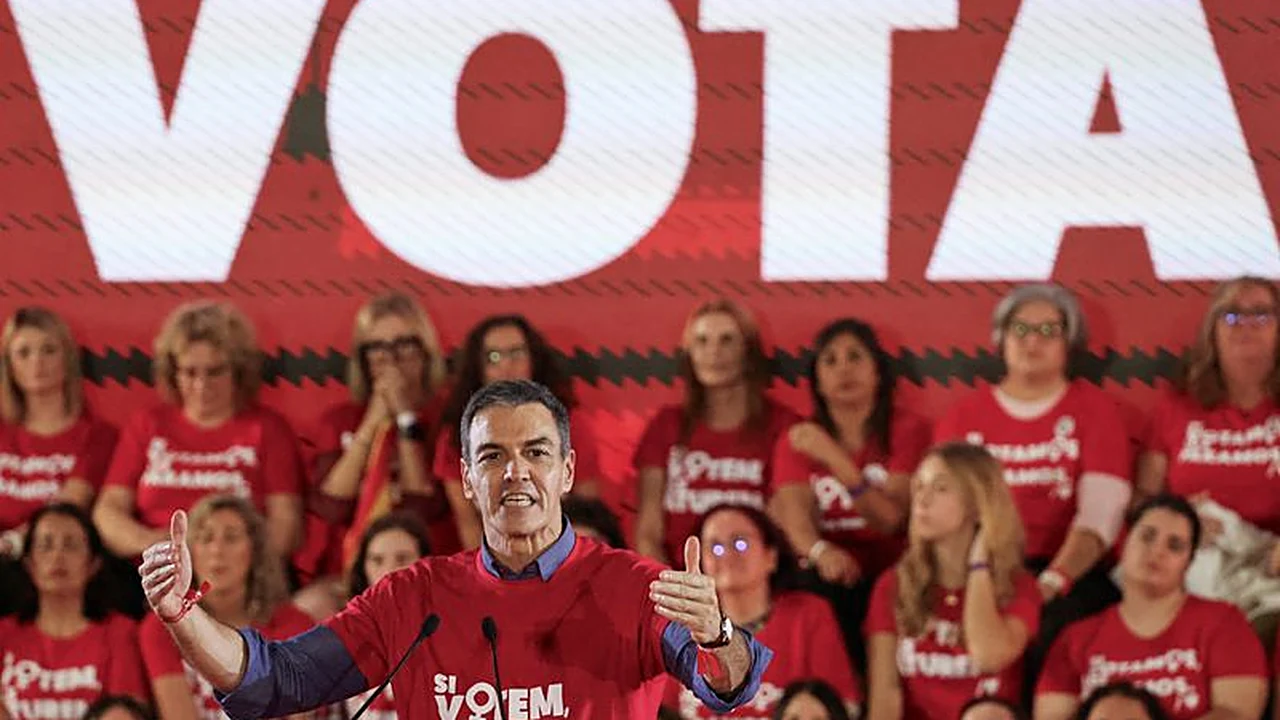
Sanchez insists he can still win. On Friday he said his own party’s data showed he could reach a majority with smaller left-wing parties, even though most polls say otherwise.
A deal between the PP and Vox would not be new at local level. The two parties already govern together in four regions. But sharing power in Madrid would be a much bigger step, and hard talks over ministries would follow.
Vox could also choose to back a PP minority government from outside, without taking ministries. Analysts say that choice depends on how many seats Vox wins.
Why Vote Matters
If Sanchez loses, the far right would join a Spanish national government for the first time since the death of dictator Francisco Franco in 1975 and the return of democracy three years later. It would also be part of a wider shift to the right across Europe.
Only three EU countries, Denmark, Lithuania and Malta, would still have centre-left leaders.
Immigration is at the heart of the campaign. Vox wants tougher controls, a policy it calls remigration for irregular migrants, the deportation of convicted foreigners and priority for Spaniards in housing queues.
The PP would ban mass amnesties for undocumented migrants, send more people back to third countries and bring in a points system for legal migration.
Sanchez has taken the opposite line. He argues immigration has helped Spain’s economy and population growth, and his government legalised the status of nearly 1.2 million immigrants earlier in 2026.
What happens next is clear. If no party wins a majority, coalition talks begin. There is no formal deadline, but if no candidate wins parliament’s confidence within two months of the first investiture vote, fresh elections are called automatically.
Sanchez has called a PP-Vox government a regression. Feijoo says voters want change after eight years of Socialist rule. By tonight, Spain will know which of them was right.
Key Facts
| Election day | Sunday 29 November 2026 |
| Vote type | Snap general election, Congress and Senate |
| Polls open | 9:00 am CET (1:00 pm PKT) |
| Polls close | 8:00 pm CET (midnight PKT, 30 Nov) |
| First results | About 1 hour after polls close |
| Seats in Congress | 350 |
| Majority needed | 176 |
| Prime Minister | Pedro Sanchez, PSOE, in office since 2018 |
| Main challenger | Alberto Nunez Feijoo, People’s Party (PP) |
| Far-right party | Vox, led by Santiago Abascal |
| Poll average | PP about 31%, PSOE about 29%, Vox about 18% |
| PP plus Vox projected seats | About 190 |
| Vox seats in 2023 | 33 |
| Election called | 5 October 2026 |
| Next vote was due | Summer 2027 |
Frequently Asked Questions
Polls close at 8pm CET, which is midnight in Pakistan, and the first results are expected about an hour later. Polls taken in the final week of the campaign will be released as soon as voting ends.
Coalition talks begin. The most likely outcome is a deal between the PP and Vox, either as a coalition or with Vox backing a PP minority government. If no candidate wins parliament’s confidence within two months of the first investiture vote, fresh elections are triggered automatically.
Sanchez called the vote on 5 October after parliament rejected his housing decrees, including a ban on evictions until 2030. The next election was not due until the summer of 2027.