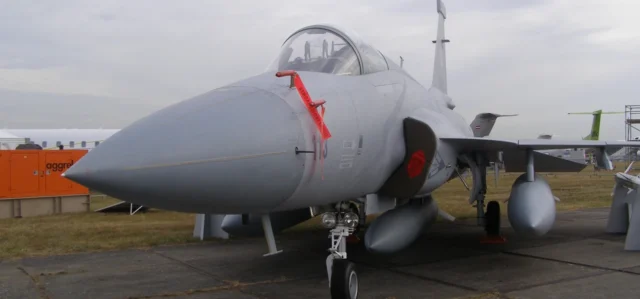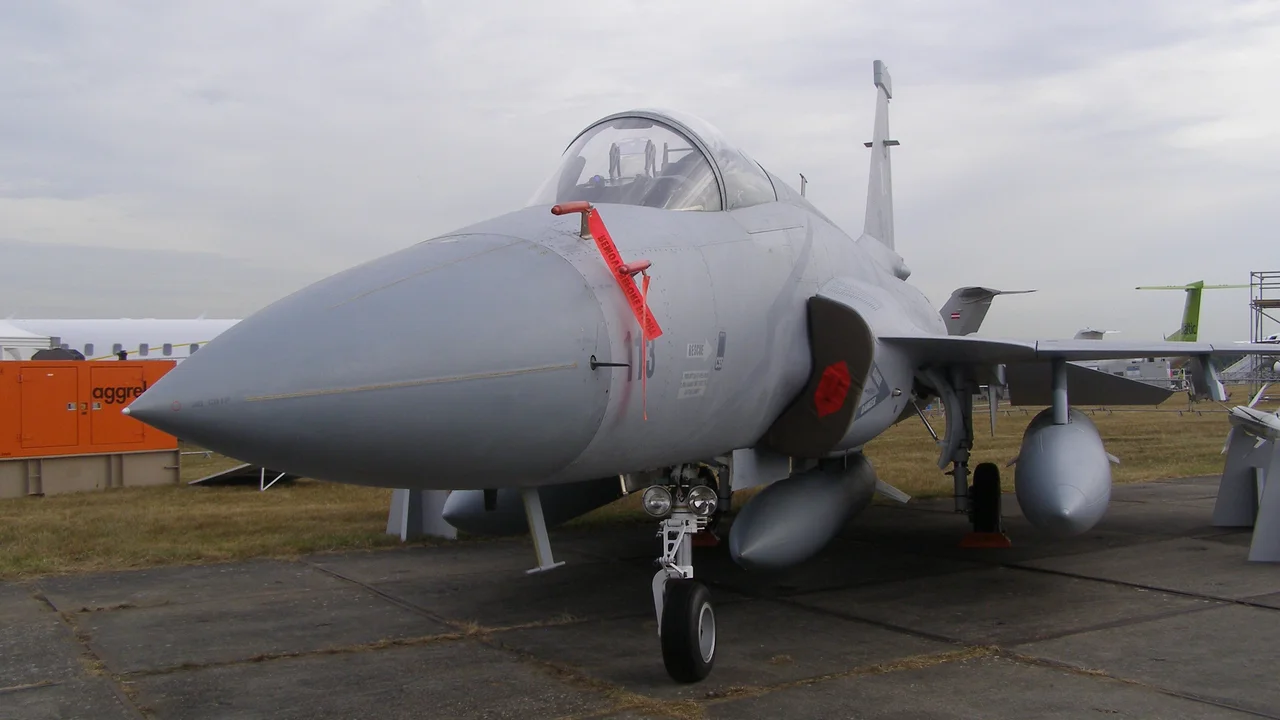
Pakistan successfully flight-tested its first indigenously developed air-to-air missile, Fa’az, on Tuesday, November 3, the military’s media wing said, calling the trial a milestone for the country’ aerospace and defence capabilities.
The trial matters because it gives Pakistan its first locally developed air-to-air weapon, a step the military presented as proof of growing self-reliance in defence production.
Fa’az carries a state-of-the-art terminal guidance system and can engage enemy aerial targets at longer ranges, the Inter-Services Public Relations (ISPR) said in its statement.
The military said the weapon will significantly enhance the operational flexibility of the Pakistan Air Force and further strengthen the country’s overall defence posture.
Senior officers of the Pakistan Armed Forces watched the launch alongside the scientists and engineers who developed the system, according to the ISPR.
President Asif Ali Zardari, Prime Minister Shehbaz Sharif, Chief of Army Staff and Chief of Defence Forces Field Marshal Syed Asim Munir, and the services chiefs congratulated the scientists and engineers, the statement said.
The successful flight test underscores the technical maturity, innovation and self-reliance achieved by Pakistan’s defence industry, the ISPR added.
Air-to-air missiles are fired from aircraft against other aircraft, and a terminal guidance system guides the weapon during the final stage of its flight, Dunya News explained.
Tuesday’s test followed two surface-to-surface missile tests last month, Dawn reported, including the Fatah-2 extended-range hypersonic ballistic missile on October 13 and an extended version of the Fatah-IV ground-launched cruise missile a week earlier.
The ISPR did not disclose the missile’s maximum range, speed, dimensions, the aircraft used to launch it, or any timeline for its induction into service, Dunya News reported. No date for further Fa’az trials or induction was announced.