A strong quake hit central Japan early on Sunday. At least 22 people were hurt. The shake struck before dawn, when most people were still at home.
The quake hit at 1:04 a.m. local time. That was 10:04 p.m. on Saturday in Pakistan. Its power was 5.7, the Japan weather agency said. The US Geological Survey gave a first figure of 5.5.
Quake Strikes Before Dawn
The centre of the quake lay in western Shizuoka Prefecture. It sat about 40 km below the ground. That is about 25 miles deep. The shake was strong, but it was not shallow.
The hardest shake hit Aichi Prefecture. Chita, in Aichi, felt upper 5 on Japan’s 0 to 7 scale. Aichi had not felt a shake of that strength since March 1997. Lower 5 was also felt in parts of Aichi, Shizuoka, Gifu and Nagano.
People felt the quake across a wide area. It reached Hamamatsu and Gifu. It also reached Yamanashi, where Mount Fuji stands. The old capitals Kyoto and Nara felt it too. Tokyo did not feel it.
No wave warning followed the quake. The Japan weather agency gave no tsunami warning. That news brought some relief to people near the coast. Officials kept watch, but they saw no sign of a wave.
Damage Across Aichi and Shizuoka
At least 22 people were hurt in Aichi and Shizuoka. Local news gave that count to the AP news agency. Kyodo News said more than 20 people were hurt in the two areas. Most were hurt as they rushed out of homes and other buildings. They fell as they moved in haste.
A woman in her 50s broke her ankle in Tokoname, Aichi. A man in his 40s fell in Toyota and hit his head. A woman in her 80s also fell in Toyota and hit her head. Both were taken to a hospital. Both were awake when help reached them.
Shop windows broke in the shake. Glass fell on streets in the hit areas. Books fell from shelves in a bookshop. No news spoke of a large building fall. The harm was wide, but it was not on a huge scale.
Fast trains slowed down in the hit areas. The Shinkansen bullet trains ran at lower speeds as a safety step. Crews checked lines and trains before full speed came back. Travel was slow for a time, but the trains kept moving.
The Hamaoka nuclear power plant sits in Shizuoka. Its operator is Chubu Electric Power. The firm said it found no fault at the plant. That check mattered a lot. The plant stands near the area where a much bigger quake could one day start.
The central government set up a liaison office after the quake. The office will bring news from the hit areas. It will help local teams act fast if more help is needed.
Aftershock Warning for Next Days
The Japan weather agency warned of more shakes. It said strong quakes could come in the next week. The next two to three days carry the most risk. People should stay ready and keep safe spots in mind.
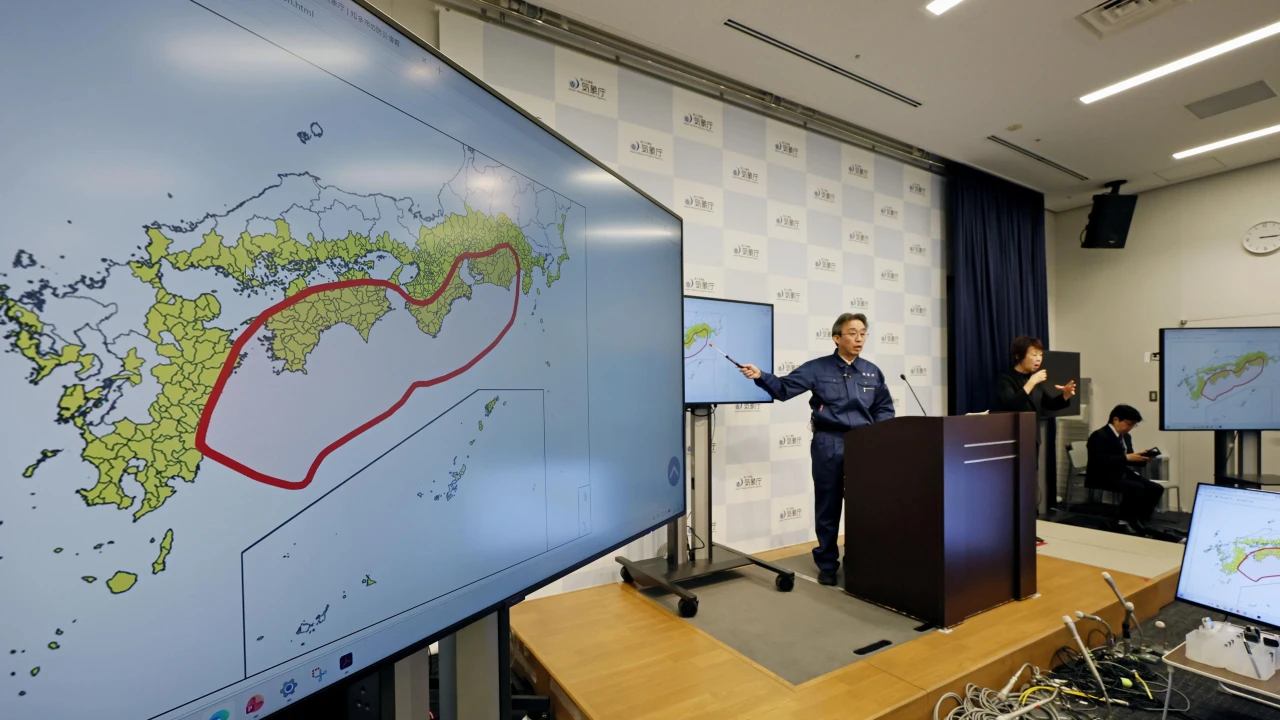
Agency official Ebita Ayataka spoke to the press after the quake. He urged people to stay alert. Small aftershocks were already felt. They can still cause harm, most of all where things are loose or weak.
Rain can make the risk worse. The agency told people to watch for falling rocks. It also warned of landslides after rain. Hillsides can slip when the ground is wet and weak.
Many people asked about a much bigger quake. The agency said a link to the feared Nankai Trough megaquake was low. The shake took place in the area where that big quake could start. Even so, experts think this quake was a separate event. It was not the start of that much larger shake.
Why Japan Shakes So Often
Japan sits on the Pacific Ring of Fire. That is a ring of quake and volcano zones around the Pacific Ocean. Several large plates of the Earth’s crust meet under Japan. When they push and slip, the ground shakes. That is why quakes are a part of life in Japan.
Japan has learned to live with this risk. Its building rules are strict. Homes and towers are made to sway, not break, in a shake. Schools and work sites hold drills so people know what to do. An early warning system can send an alert in seconds.
One fear looms larger than the rest. Scientists expect a huge quake one day off southern Japan. It would start in the Nankai Trough, a deep sea trench. Officials call it a megaquake. It could be far stronger than Sunday’s quake.
Sunday’s quake was not that event, officials said. The warning still shows why people stay alert. A strong shake can come at any hour. It can hurt people who rush, fall, or stand near glass. Care in the first days can save lives.
| Magnitude | 5.7 (JMA) / 5.5 (USGS) |
| Time | 1:04 a.m. Sunday, 8 Nov 2026 |
| Epicentre | Western Shizuoka Prefecture |
| Depth | About 40 km |
| Strongest shaking | Upper 5 in Chita, Aichi |
| Injured | At least 22 |
| Tsunami warning | None issued |
| Bullet trains | Slowed as precaution |
| Hamaoka nuclear plant | No abnormalities |
No. The Japan Meteorological Agency issued no tsunami warning after the 5.7-magnitude quake.
Chita in Aichi recorded upper 5 on Japan’s 0-7 scale — the first jolt of that strength in Aichi since March 1997.
The weather agency warned strong quakes remain possible over the next two to three days, but said a link to the feared Nankai Trough megaquake was unlikely.