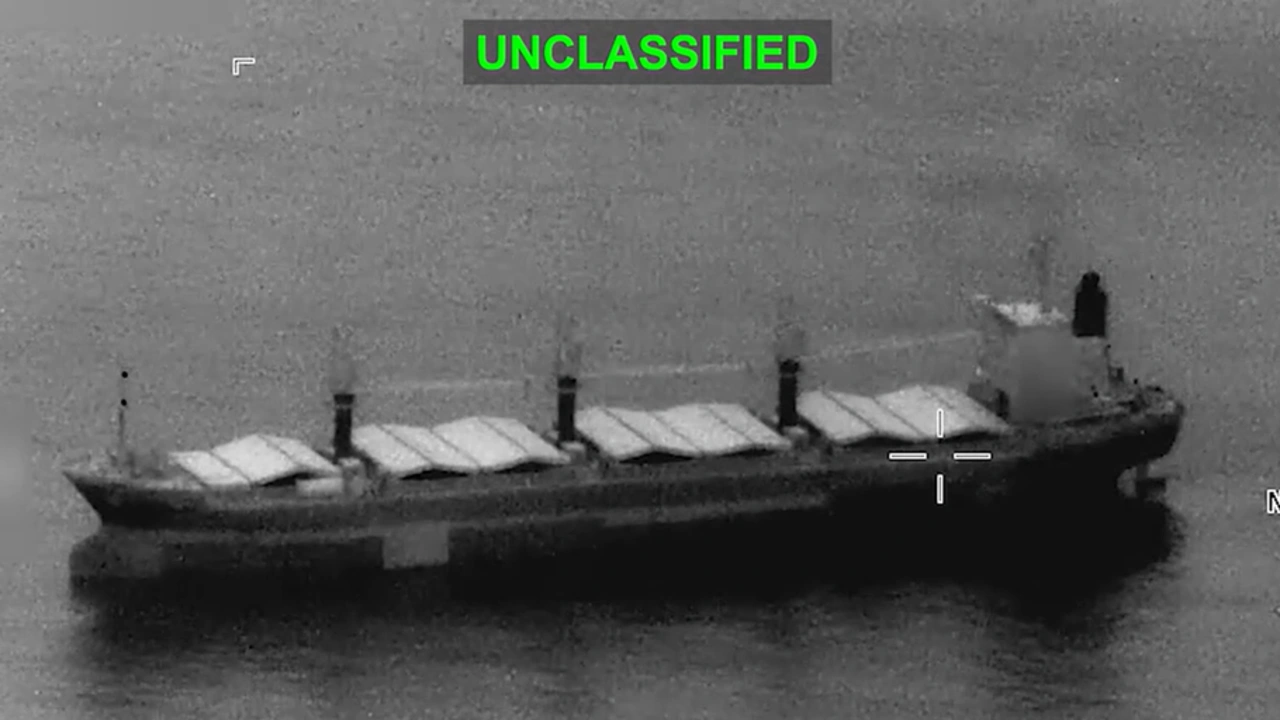
A United States warplane disabled a cargo ship in the Gulf of Oman on Saturday, 7 November 2026, after its crew refused to obey repeated warnings and tried to break through a United States naval blockade of Iran several times.
The vessel is M/V Huda, a cargo ship that flies the flag of St Kitts and Nevis. United States Central Command, known as CENTCOM, said an American military aircraft fired precision munitions at the rear of the ship. The strike left the ship unable to move on its own.
United States forces had told the crew to leave the areas that would be hit before the aircraft opened fire. The aim was to avoid loss of life, CENTCOM said.
The ship had called at a port in Iran and was trying to leave regional waters when United States forces stopped it. CENTCOM did not say if anyone on board was hurt. It also did not say how many crew members were on the ship, or what cargo it was carrying.
A maritime tracking service, Vesseltracker, reported that the ship was hit at an anchorage off Khor Fakkan and that all crew were reportedly safe.
Warnings ignored before precision strike
CENTCOM said the crew ignored repeated warnings. It said the ship tried to break the blockade more than once. Each time, United States forces told it to turn back. Each time, it kept going. That pattern, CENTCOM said, led to the strike on Saturday.
The aircraft aimed at the stern, or rear, of the ship. A hit there can stop a ship without sinking it. It can damage the parts that drive the ship forward. United States forces chose that target after they warned the crew to move away from it.
“U.S. Central Command (CENTCOM) forces disabled a commercial vessel in the Gulf of Oman, Nov. 7, after the ship’s civilian crew ignored repeated warnings and attempted to violate the naval blockade against Iran multiple times.”
U.S. Central Command
The strike took place in the Gulf of Oman, a busy sea route that links the Arabian Sea with the Strait of Hormuz. Ships pass through it every day to reach ports in the Gulf and beyond.
The Associated Press noted that the last confirmed United States strike on a cargo vessel came nearly a month earlier. The latest strike shows that United States forces are still willing to use force when a ship refuses to obey.
Blockade tally since July
CENTCOM has run the naval blockade since July. Under the blockade, United States warships stop ships that are sailing to or from Iranian ports. Ships that obey orders are sent back. Ships that refuse can be disabled or destroyed.
Since July, the figures released by CENTCOM show a wide campaign at sea. Most ships have obeyed. A small number have refused, and those ships have faced force.
| Detail | Fact |
|---|---|
| Vessel | M/V Huda |
| Flag | St Kitts and Nevis |
| Date of strike | 7 November 2026 |
| Location | Gulf of Oman |
| Vessels redirected since July | 147 |
| Merchant ships disabled since July | 5 |
| Iranian oil tankers destroyed since July | 10 |
| Value of crude oil exports stopped | More than $25 billion |
The tally also includes 10 Iranian commercial oil tankers that were destroyed. CENTCOM described those tankers as part of a multibillion-dollar shadow shipping network run by the Islamic Revolutionary Guard Corps, or IRGC. The network, CENTCOM said, moves Iranian oil in secret and earns money for the force.
CENTCOM estimates that the blockade has stopped Iran from exporting more than $25 billion in crude oil. That figure shows the scale of the pressure on Iran. Oil sales are a main source of money for the Iranian state.
New task force targets land routes
On the same day as the strike, CENTCOM announced a new task force. The unit will try to stop Iran from moving advanced weapons and other sanctioned material over land borders and through the Caspian Sea.
The move widens a campaign that has so far been fought mainly at sea. Until now, the blockade has focused on ships in the Strait of Hormuz and nearby waters. The new task force takes the effort onto land and to the Caspian Sea, north of Iran.
United States officials say Iran uses land routes and the Caspian Sea to move weapons and goods that are under sanctions. Those routes are harder to watch than sea lanes. A task force that works across borders will need help from states in the region, and it will need to share information fast.
The announcement came from CENTCOM on Saturday. It did not give a start date for the task force, or say which forces will take part.
Why Gulf shipping faces higher risk
A naval blockade is a simple idea with wide effects. Warships stop ships from entering or leaving the ports of a country. In this case, the United States is using the blockade to stop ships from trading with Iran.
The United States runs the blockade for two main reasons. First, it wants to cut the money Iran earns from oil. Less oil money means less money for the Iranian state and its armed forces. Second, it wants to stop weapons and other banned goods from reaching Iran, and to stop Iranian weapons from reaching armed groups in the region.
This strike matters because it shows that enforcement is getting tougher. Ships that refuse orders now face a real risk of being hit. That raises the risk and the cost for shipping in the Gulf. Owners, crews and insurers must weigh the chance of a strike each time a ship sails near Iranian ports.
The strike also comes at a tense time. United States President Donald Trump has been threatening a new offensive against Iran. Tehran has threatened broad retaliation against Gulf infrastructure. The strike came a day after Trump disclosed limited United States strikes on an Iranian air defence system.
Qatar has been pressing the United States and Iran to reach a peace deal, and has said they should not wait to do so. No deal has been reached yet. That leaves the blockade, and the risk of more strikes, in place for now.
For ships in the Gulf, the message is clear. Obey warnings and turn back, or face force. For Iran, the message is also clear. The United States is ready to widen its campaign, at sea and on land, to cut its oil income and its weapons trade.
A United States military aircraft fired precision munitions at the rear of M/V Huda in the Gulf of Oman on 7 November 2026 and disabled it. CENTCOM said the crew had ignored repeated warnings and tried to break the naval blockade of Iran several times.
United States warships stop ships sailing to or from Iranian ports. Ships that obey orders are redirected. Ships that refuse can be disabled or destroyed. CENTCOM has run the blockade since July 2026.
Risk remains high while the blockade stays in place. CENTCOM has also formed a new task force to block land routes and Caspian Sea routes. Ship owners and crews face a higher chance of being stopped or hit if they refuse orders.