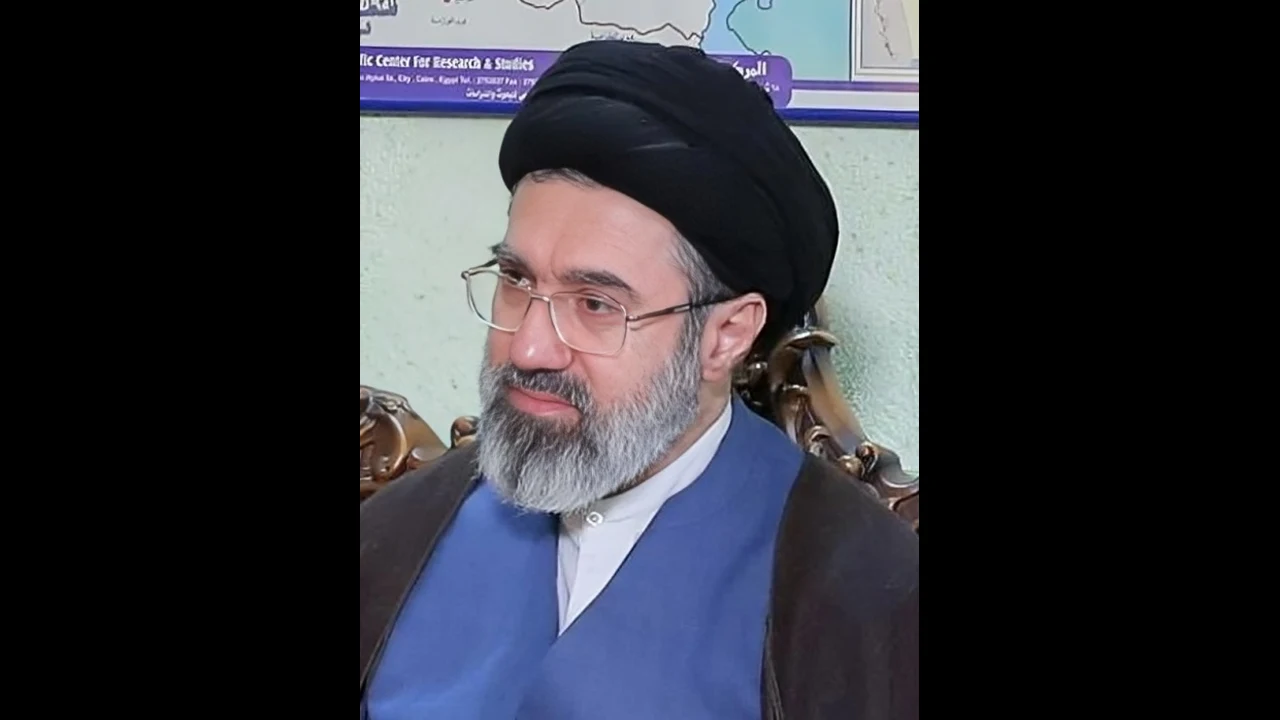
Iran’s Supreme Leader Mojtaba Khamenei has ordered the country’s military commanders to prepare an immediate response without geographic limits to any new attack, as Tehran warned on Sunday that a renewed war with the United States could last longer and spread far wider than the fighting that began in February.
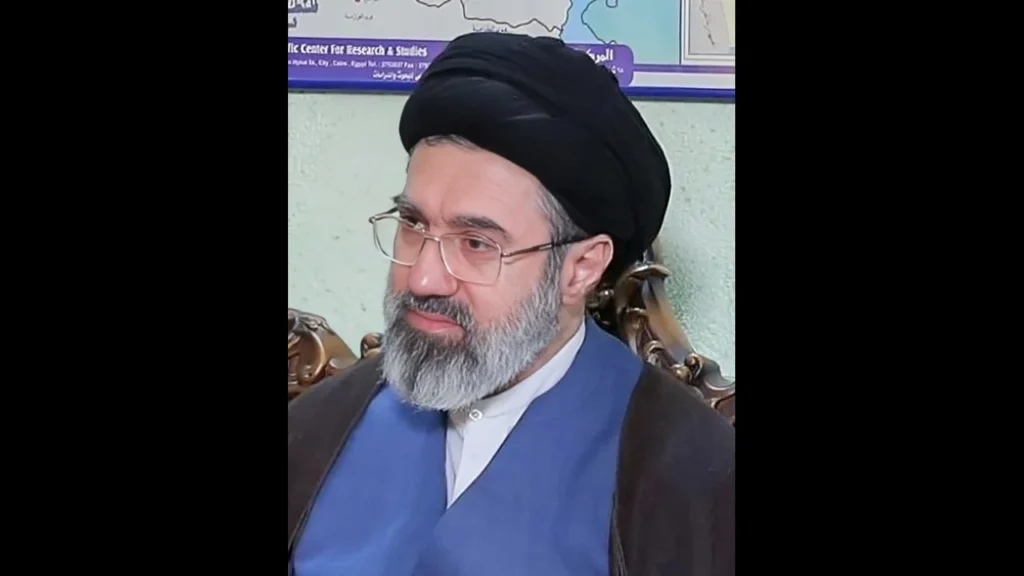
Khamenei issued the order in a written message to senior commanders on Saturday, according to Iranian state media. He said any level or type of threat must be met with an immediate, impactful and geographically unrestricted response, and he instructed commanders to update Iran’s target list to include all types of tangible and intangible assets belonging to what he called the American-Zionist enemy.
Iran’s warning matters because it arrives two days before the United States votes in midterm elections on Tuesday, November 3, and while Washington and Tehran are sending sharply mixed signals about whether diplomacy or a new round of strikes comes next.
Army spokesman Mohammad Akraminia, speaking on Sunday, said a potential future war could last longer than the previous conflict, and the American president would not be in a position to dictate the timing or the conditions of its conclusion. He said the flames of war would undoubtedly engulf a much wider geographical area, and he warned that United States facilities, equipment, personnel and interests could be targeted wherever they are within reach, according to Iran’s semi-official Mehr news agency.
No geographical limitations
Revolutionary Guards spokesman Hossein Mohebbi echoed Khamenei’s message on Sunday, telling state television that in a conflict with America there are no geographical limitations, and a vast theatre has been defined for inflicting damage upon the enemy. Foreign Minister Abbas Araghchi struck a different note in public, saying Iran hopes the other side will exercise rationality and choose diplomacy, while adding that Iran remains prepared for both defence and diplomacy, according to the official IRNA news agency.
Araghchi also warned on social media that there would no longer be any red lines, and he said there are currently no plans for meetings with United States officials. Iran’s conditions are clear, he said, and consultations regarding them are ongoing among mediators.
Trump’s warning
United States President Donald Trump has kept the threat of fresh strikes in public view. He told reporters that the United States still has to take care of one or two sites, and it could do that in 10 minutes, naming a suspected underground nuclear complex he called Pickaxe Mountain. At a campaign rally in Iowa on Sunday, ahead of the November 3 midterm elections, Trump said the only reason the United States is not finished with Iran is that he wants to be nice and try to save lives if he can, before adding that at some point the United States is going to have to give Tehran the hammer.
Trump reiterated the threat after United States media reported that he had held a phone call with Israeli Prime Minister Benjamin Netanyahu on Saturday about whether and when to ramp up combat operations against Iran. Axios quoted one United States official and one Israeli official as saying Netanyahu pressed Trump to strike Iran immediately after the midterm elections, while Trump was eager to let negotiations play out. The Israeli source described the call as tough, while the United States source described it as direct, according to Axios. Speaking to reporters on Sunday, Trump confirmed he had discussed Iran with Netanyahu but would not elaborate.
United States Secretary of State Marco Rubio said on Saturday that if there is a diplomatic solution, Washington would be open to it. Rubio also warned that the United States can achieve military objectives if it seeks to, while adding that Trump had not made a decision on any fresh strikes. In Israel, Netanyahu has spoken of a historic, one-time opportunity to topple the Iranian government, according to the Manila Times report.
Diplomacy still open
Diplomatic efforts to avert a resumption of fighting are under way, though they have yet to produce a lasting agreement. Qatari mediators landed in Tehran on Friday, and Qatar and Pakistan have been mediating between the warring parties. Iran’s security chief Mohsen Rezaei disclosed on Saturday that he had received a letter from United States Vice President JD Vance seeking to revive talks, and he described what he called a positive change in tone from the United States side, while saying he had yet to respond.
Rezaei said Tehran had previously told Washington that unless its conditions were met, neither would the Strait of Hormuz be reopened nor would there be any negotiations. Those conditions include unfreezing Iranian assets abroad, ending the months-long United States naval blockade of Iranian ports, lifting longstanding sanctions and ending the war on all fronts. Since the war began, Iran has claimed control over the Strait of Hormuz, a vital global energy conduit that normally carries around one-fifth of global oil consumption, and it has repeatedly targeted vessels attempting to cross without its authorisation. The United States has imposed a naval counter-blockade on Iranian ports.
A ship traversing the strait struck a mine and caught fire, Iranian state television reported on Saturday. On Friday, Iran’s Revolutionary Guards said three oil tankers had been halted after encountering unspecified incidents or hitting mines. The blockade has caused a spike in global energy prices, making the war unpopular among the United States public ahead of Tuesday’s congressional elections, according to the Manila Times.
Gulf states brace for the worst
Gulf states, caught between their American security ties and the risk of retaliation, are pushing mediation while preparing for a wider conflict. Anwar Gargash, diplomatic adviser to the president of the United Arab Emirates, said on Sunday that the Emirates hoped the exchanges would yield a breakthrough, but was preparing for the worst. It is not in the interest of the region to go through another round of fighting, he told a conference in Manama, adding that the region has shown before that it is braced for the worst.
In Tehran, some residents described a sense of helplessness as threats of renewed fighting mount. The news coming in is truly worrying, Mohadese, a 27-year-old health inspector, told AFP, but there is nothing she can actually do about it. Others saw no reason to be concerned. Ebrahim, a 48-year-old vendor in downtown Tehran, told AFP that Iranians do not fear another war, saying they have been at war for 48 years now and are always at war.
What happens next
Context for the warnings goes back to February 28, when the United States and Israel launched joint attacks on Tehran and other Iranian cities. Iran responded with waves of missile and drone strikes targeting Israel and United States bases and assets in the region, while tightening its control over the Strait of Hormuz, and Iran-aligned armed groups joined the fighting in Lebanon and Yemen, according to AFP.
What is confirmed is the exchange of warnings and the parallel diplomatic track: Khamenei’s order, the army’s warning of a longer and wider war, Trump’s renewed threats, Rubio’s statement that no decision on fresh strikes has been made, and the mediation efforts by Qatar and Pakistan. What is not confirmed is whether the United States will strike after the midterms, or whether talks will produce an agreement first. The next known date is Tuesday, November 3, when American voters go to the polls, and the question of strikes is now tied in public statements to what happens after that vote.