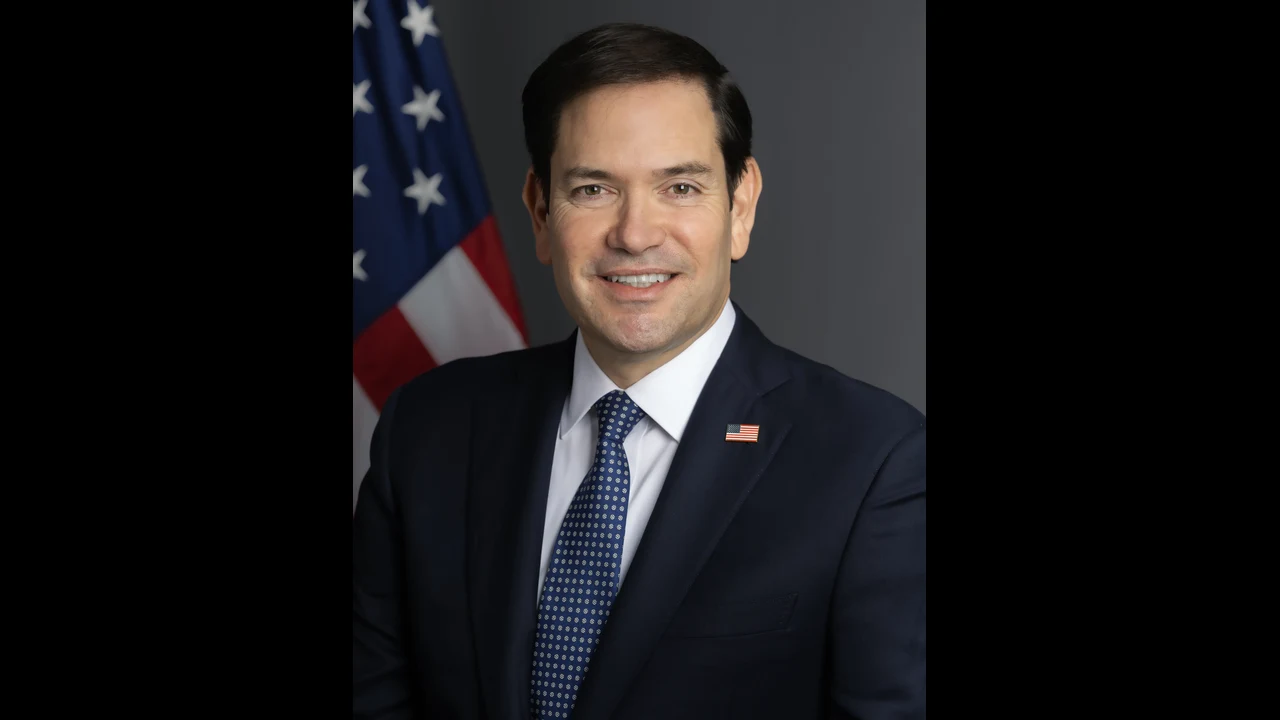
Marco Rubio said on Saturday that President Donald Trump has not decided whether to launch fresh strikes against Iran, and that Trump would prefer to settle the confrontation through diplomacy. Rubio spoke to reporters in Atlanta, Georgia, at the close of a two-day meeting of foreign ministers from the Group of 20 major economies, which he was hosting.
Rubio’s statement matters because it came hours after Trump had raised the prospect of swift further military action, and days before midterm elections on Tuesday, November 3, that will decide whether Republicans keep their thin majorities in Congress. Trump has held off on new strikes in recent weeks, and has repeatedly hinted that he could resume them after the vote.
“We can achieve military objectives if we seek to,” Rubio told the news conference, according to Reuters and other outlets. “He hasn’t made a decision, and I have no announcement to make in that regard today, and nor do we take any of it lightly.”
Rubio stressed that Washington was not rushing toward war. “The President prefers to solve it diplomatically,” he said, adding that the United States remained the world’s most capable military power and had everything it needed to succeed if military action were required. He added: “We have everything we need to be successful, but we would prefer to resolve this peacefully.”
No decision, no deadline
Rubio refused to set a timeframe for the diplomatic effort or to characterise how far it had progressed. “I’m not going to characterise neither the progress on those talks nor any timeframe on it, other than to tell you that if there is a diplomatic solution, we would be open to it,” he said.
Any agreement, he added, could not endanger US national security or fail to address Washington’s core concerns. He accused Tehran of actively and openly targeting commercial vessels carrying oil and gas, and of supporting regional armed groups accused of destabilising the wider Middle East.
Rubio also said American naval forces were intercepting incoming drones and anti-ship missiles almost every night, a measure of how close the confrontation remains to open fighting despite the diplomatic contacts.
At the same time, he made clear that the military option had not been taken off the table. Trump, he said, expressed incredible confidence that the United States could act militarily if it needed to, and the administration would not approach the question lightly.
Talks through Qatar continue
Iranian negotiators held talks in Doha on Saturday with Qatari mediators to discuss paths out of the war in the Gulf, a source briefed on the negotiations told Reuters. Rubio confirmed that contacts with Iran were under way both directly and through intermediaries.
“There are multiple talks. Talks have actually never stopped,” Rubio said, describing conversations that had continued through direct channels as well as intermediaries. He declined to say whether the talks were making progress.
Tehran’s tone, according to the Reuters report, had completely changed in recent days, even as its leaders warned against new attacks. Iran’s supreme leader warned the United States and Israel on Saturday against launching fresh strikes, following threats to resume them after the elections.
Iran’s influential security chief, Mohsen Rezaei, said Tehran was debating whether to lift its longstanding ban on nuclear weapons should hostilities resume, although he said no such decision had been taken. Iran has denied carrying out nuclear weapons work.
European Union foreign policy chief Kaja Kallas told Agence France-Presse: “We are calling for a diplomatic solution, and really, escalation does not benefit anyone.”
Trump launched the war alongside Israel at the end of February, and has said the United States knocked out much of Iran’s military and nuclear programme. He has previously said he was weighing whether to finish off the remaining targets after the midterms.
What remains unresolved is whether the Qatar-mediated contacts can produce an agreement that addresses Washington’s demands on Iran’s nuclear ambitions and its support for armed groups, or whether the pause in fighting ends once voters have had their say on Tuesday.
For now, the confirmed position from Washington is narrow: no decision on strikes, no deadline for talks, and a stated preference for diplomacy backed by a military threat that Rubio insisted was real.