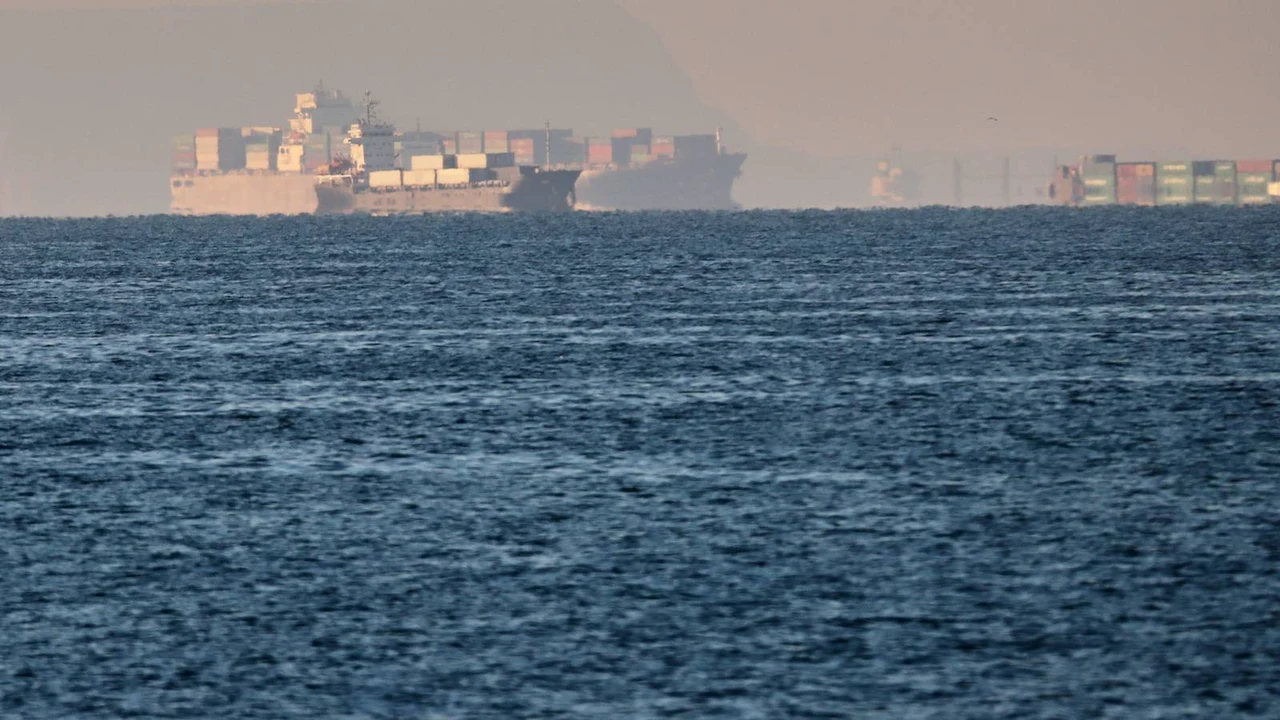
American forces have disabled another merchant ship in the Gulf of Oman after it tried to sail through a United States naval blockade of Iranian ports. United States Central Command said on Friday that a military aircraft fired precision munitions at the stern of the Palau-flagged bulk carrier Pacific Archer on Thursday, knocking out its propulsion. The civilian crew was not hurt. The ship had left Bandar Abbas, a major port city on Iran’s southern coast, before it attempted the crossing. Ship tracking websites list Singapore as its destination. Central Command said its forces gave the crew repeated warnings before opening fire.
Pacific Archer Disabled in Gulf of Oman
The strike happened on Thursday, 26 November, in the Gulf of Oman, the sea lane that leads into the Strait of Hormuz. Central Command announced the action in a statement on Friday, 27 November. It said an American military aircraft launched precision munitions that hit the back of the ship, known as the stern. “The ship’s propulsion was ultimately disabled and the civilian crew was unharmed,” the statement said. The Pacific Archer is a Supramax bulk carrier, a mid-sized cargo ship built to carry dry goods such as grain or coal in bulk. Vessel records list it at 52,407 deadweight tonnes, built in 2001, with IMO number 9222510. It sails under the flag of Palau, a small Pacific island nation, a common practice in world shipping. Central Command has said throughout the blockade that its forces warn merchant ships several times before firing. The command repeated that point in its latest statement, noting that the Pacific Archer’s crew was warned “despite multiple warnings” before the strike.
Blockade Numbers Since April
The Pacific Archer is the 15th vessel American forces have said they disabled since the blockade began in the spring. It is the sixth since the blockade resumed this summer. The previous ship was disabled on 7 November — the St Kitts-flagged M/V Huda, also in the Gulf of Oman. Since the blockade resumed in July, American forces say they have turned back 158 merchant ships that agreed to comply with warnings, and disabled the small number that refused. The United States first imposed the blockade in April. It was lifted during the summer while Washington and Tehran held talks, then put back in place in July. The practice has drawn criticism before. In June, an American strike on a Guinea-Bissau-flagged tanker trying to evade the blockade killed three people. Three Indian sailors were killed when American forces struck another Palau-flagged vessel, the M/T Settebello, around the same period. The head of the International Maritime Organization, the United Nations shipping agency, condemned that attack. Earlier this month, Washington also announced a new unit, Task Force Iron Gate, to restrict the movement of weapons and sanctioned goods across Iran’s land borders and the Caspian Sea.
Tehran Vows to Break Blockade
Iran answered the latest strike with defiance. Mohammad Mokhber, an adviser to Iran’s Supreme Leader Ayatollah Mojtaba Khamenei, said on Friday: “Neither will the Strait of Hormuz be reopened, nor will we allow the blockade to remain in place.” State media carried his words. He gave no details of how Iran plans to break the embargo. Iran’s Revolutionary Guard said separately on Friday that two tankers tried to cross the Strait of Hormuz through what it called an “unauthorized” route. It claimed one of them hit a naval mine while the other was forced to turn back. Those claims could not be independently verified. The Guard also said the number of oil tankers trying to use unauthorized routes through the waterway has fallen sharply in recent days, and that Iran continues to warn ships not to pass through the strait without approval from Tehran. The strike comes as the Trump administration weighs its next steps in a long-running confrontation with Iran. The war between the two sides began at the end of February and has settled into a quiet stalemate over the past several months. Earlier in November, officials in the region told The Associated Press that Israeli Prime Minister Benjamin Netanyahu was pushing the United States to restart the war, or to allow Israel to strike Iran’s nuclear sites and missile sites. At the same time, government and security officials from Persian Gulf countries, as well as Pakistan and Turkiye, have been pressing Washington by phone to hold off a renewed war. President Donald Trump has swung between threatening more large-scale strikes and insisting that the war “militarily is effectively over.” The United States keeps a large naval force in the region, including two aircraft carriers.
Why Blockade Matters
A blockade is simple to explain. The United States is stopping ships from reaching Iranian ports, so that Iran cannot sell its oil freely. Oil sales are one of Iran’s main sources of money, so cutting them off puts pressure on Tehran to accept American terms in talks. The Strait of Hormuz matters because it is the narrow waterway through which much of the world’s oil travels by sea. When ships are attacked or stopped near it, oil traders worry about supply, and prices can rise. That is why every new strike in the Gulf of Oman is watched far beyond the region. The numbers show the pressure is already biting. Oil flows in the first two weeks of November fell by around 20 percent to about 13 million barrels per day, compared with October, when exports were roughly equal to pre-war amounts of 15 to 16 million barrels per day, according to energy research firm Rystad Energy. A United Nations trade report adds that disruptions in the Strait of Hormuz, the Red Sea, the Black Sea and the Panama Canal are making voyages longer, pushing up fuel costs and causing port congestion. Trade keeps moving through other routes, but at a higher cost. For ordinary people, the stakes are plain. If the standoff escalates, fuel prices can climb and shipping costs rise, which feeds into the price of goods everywhere. If talks succeed instead, the blockade could be lifted again, as it was in the summer. For now, each disabled ship is a sign that neither side is backing down.
Key Facts
| Detail | Fact |
|---|---|
| Ship | M/V Pacific Archer, Palau-flagged bulk carrier |
| Vessel size | 52,407 deadweight tonnes, built 2001, IMO 9222510 |
| Strike date | Thursday, 26 November 2026 |
| Location | Gulf of Oman |
| Departed from | Bandar Abbas, Iran |
| Listed destination | Singapore |
| Weapon | Aircraft-launched precision munitions at stern |
| Result | Propulsion disabled, civilian crew unharmed |
| Announcement | US Central Command statement, Friday 27 November |
| Vessels disabled since spring | 15 (6th since blockade resumed in summer) |
| Ships redirected since July | 158 |
| Previous vessel disabled | 7 November 2026 (M/V Huda) |
| Blockade started | April 2026; lifted in summer, resumed July 2026 |
| Oil flows, early November | ~13 million barrels per day, down ~20% from October |
FAQs
A United States military aircraft fired precision munitions at the stern of the Palau-flagged bulk carrier on Thursday, 26 November, in the Gulf of Oman. The strike disabled the ship’s propulsion. Its civilian crew was unharmed.
Central Command said the Pacific Archer left the Iranian port of Bandar Abbas and tried to run the United States naval blockade of Iranian ports, despite repeated warnings. The blockade aims to stop Iranian oil exports.
The Pacific Archer is the 15th vessel American forces have said they disabled since the blockade began in the spring, and the sixth since it resumed in July. Forces have also redirected 158 merchant ships that complied with warnings.