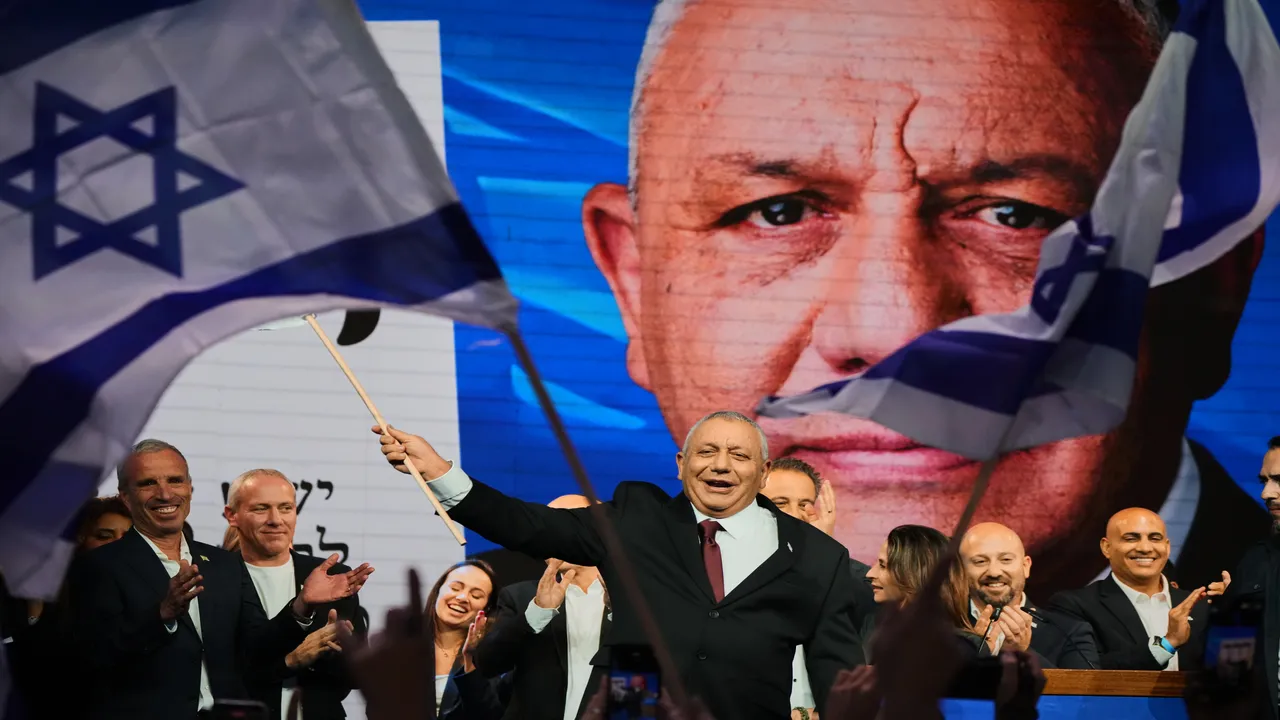
Israel’s president has asked Gadi Eisenkot to try to form the next government.
The move is a clear setback for Benjamin Netanyahu, who has led Israel for longer than any other prime minister.
President Isaac Herzog told Eisenkot of his choice on Saturday evening, 7 November. A formal ceremony will take place on Sunday, 8 November. The decision came after a deadlocked election on 27 October left no group with a clear win.
Eisenkot is a former army chief. He led Israel’s military from 2015 to 2019. He later served as an observer in Netanyahu’s war cabinet during the first eight months of the war in Gaza.
Herzog Hands Eisenkot Mandate Sunday
Herzog chose Eisenkot after counting support from members of the Knesset, Israel’s parliament. Eisenkot won the backing of 67 of the 120 members. Netanyahu won the backing of 46 members.
One traditional ally of Netanyahu did not back him this time. United Torah Judaism, which holds seven seats, declined to recommend Netanyahu. Its choice helped Eisenkot move ahead.
Yashar said the 67 recommendations are the most any candidate has received since 2015.
67 Back Eisenkot, 46 Back Netanyahu
The election on 27 October split the Knesset into three main parts. Netanyahu’s right-wing and religious bloc won 53 seats. Eisenkot’s four-party alliance won 48 seats. Arab-led parties won a record 19 seats.
Eisenkot’s alliance brings together four groups. They are his own party, Yashar; Together, which includes former prime ministers Naftali Bennett and Yair Lapid; Avigdor Liberman’s Yisrael Beiteinu; and the left-wing Democrats, led by Yair Golan.
| Eisenkot recommendations | 67 |
| Netanyahu recommendations | 46 |
| Netanyahu bloc seats | 53 |
| Eisenkot alliance seats | 48 |
| Arab-led parties seats | 19 |
| Majority needed | 61 |
| Knesset total seats | 120 |
Mandate Does Not Mean Power Yet
A mandate is a formal task, not a job in power. It gives Eisenkot the right to try to build a coalition. Until a vote in the Knesset, nothing changes at the top.
The number that counts is 61. The Knesset has 120 seats, so 61 gives a majority. No bloc reached that number in the election. Eisenkot’s alliance has only 48 seats, so it needs help from outside its own group.
For now, Netanyahu stays in office as caretaker prime minister. Israeli law says only a simple majority is needed to set up a government. But removing a government needs an absolute majority of 61 members who support an alternative.
Eisenkot wants a national emergency government. He wants a minority government sworn in as soon as possible, with Arab parties backing it from outside. He has set four conditions for any party that joins him.
They must recognise Israel as a Jewish, democratic, liberal and egalitarian state, back the values of the Declaration of Independence, support universal service in the military, in national service or in civilian service, and recognise Hamas as a terrorist organisation.
The last condition rules Arab parties out of the Cabinet. But they could still support a government from outside, without holding minister posts.
That plan faces a hard problem. Liberman has ruled out any government that depends on Arab parties. He wants a 61-seat coalition with the two ultra-Orthodox parties, Shas and United Torah Judaism, without Arab parties. He says three or four Likud lawmakers may defect.
That idea clashes with the opposition pledge to end the blanket draft exemption for ultra-Orthodox men. The ultra-Orthodox parties want that exemption written into law.
Netanyahu claims the vote was stolen by Arab parties through bribery and foreign funding, with no public evidence. The election commission confirmed the results and rejected Likud fraud claims. His loyalist Shin Bet director, David Zini, has pushed to investigate Arab politicians, also without public evidence.
In a video statement on Saturday, Netanyahu said that if a minority government forms with Arab parties’ support, Israel will simply not survive. He called for a national unity government with his whole bloc. Yashar called this pathetic spin. It said that if Likud wants a broad unity government, it should dissolve its alliance with extremists and join a government under Prime Minister Eisenkot.
What Happens Next
Eisenkot has 28 days to form a coalition. He may get a 14-day extension, which would give him up to six weeks in total. If he fails, the mandate passes to Netanyahu for another four weeks.
On Friday, Eisenkot wrote on X: “A situation in which a caretaker prime minister in the minority, who has lost the trust of the people in such an extreme way, continues to operate the security system and law enforcement authorities, is a dangerous situation that must not continue even for one more day.”
The first test comes on Tuesday, 10 November, when the new Knesset is sworn in. The opposition plans to replace Netanyahu’s Knesset speaker, which would weaken his grip. The opposition also wants a state commission of inquiry into the security failures that led to the Hamas attack on 7 October 2023.
It means Herzog has given Eisenkot the first chance to build a government. Eisenkot must win enough support in the Knesset. The mandate alone does not make him prime minister.
No, not alone. His alliance has 48 seats, and 61 are needed for a majority. He needs backing from other parties, or support from outside, to win a vote.
The mandate passes to Netanyahu for another four weeks. Netanyahu would then get his own chance to build a coalition. If no one can form a government, Israel could face another election.